.avif)

Introduction
Two credible datasets say opposite things about remote tech work right now:
Robert Half's analysis of job postings found that 87% of roles posted in Q2 2026 were fully on-site, 10% hybrid, and just 3% fully remote, up from 65% fully in-office in Q4 2025.
The FlexJobs Remote Work Index, meanwhile, reported that remote postings rose 22% quarter over quarter in Q2 2026, with computer and IT postings more than doubling compared with Q1.
Both are right. They're measuring different denominators, and understanding why is the first useful thing to know about remote IT staffing services.
If you're evaluating a partner, the market you're buying into is smaller as a share of all hiring and busier in absolute terms than it was six months ago.
This covers what these services actually include, how the engagement models differ, what the compliance load looks like, and the questions worth asking a vendor.
TL;DR
- Remote IT staffing services place technology professionals who work from anywhere, with the agency handling sourcing, payroll, and employer-of-record obligations.
- The single biggest thing you're outsourcing is not recruiting. It's multi-state employment compliance, which triggers the moment one person works in a new state.
- Contract, contract-to-hire, staff augmentation, and direct hire behave very differently on cost, control, and risk. Pick the model before you pick the vendor.
- Remote-only postings are a small share of the market, so treating "fully remote" as a recruiting advantage still works, but only if the rest of your offer is competitive.
- Bill rate is not a markup on salary. It bundles pay, employment taxes, insurance, and margin, and comparing it against a base salary is the most common budgeting error.
What remote IT staffing services actually cover
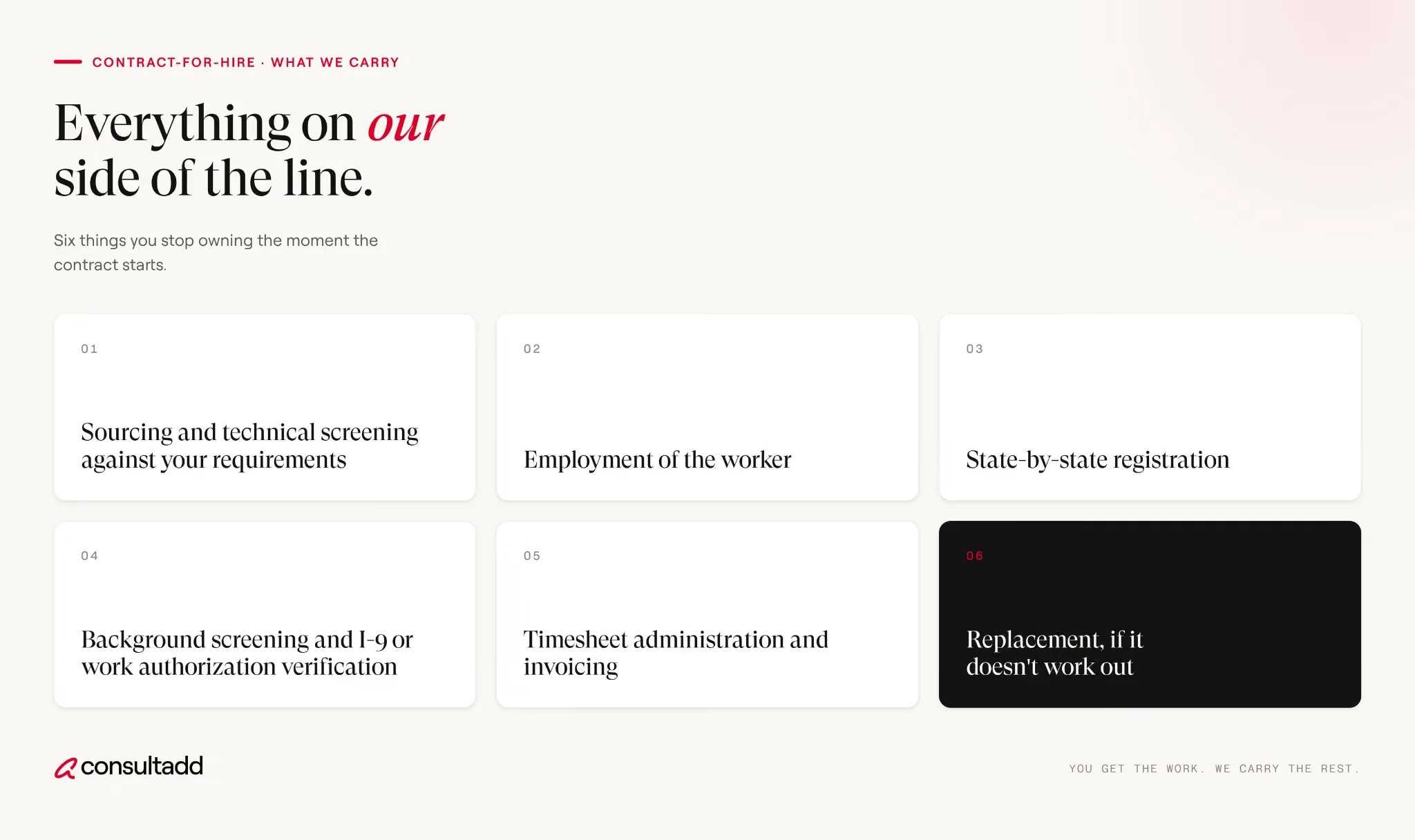
The label gets used loosely, so here's the practical scope. A remote IT staffing engagement usually includes:
- Sourcing and technical screening against your requirements
- Employment of the worker, meaning the agency holds the W-2 and runs payroll
- State-by-state registration, withholding, unemployment insurance, and workers' compensation wherever the person sits
- Background screening and I-9 or work authorization verification
- Timesheet administration and invoicing
- Replacement if a placement doesn't work out, usually within a defined window
What it typically does not include: managing the work. You still own the tickets, the code review, the standups, and the outcome.
If you want a vendor to own delivery rather than headcount, you're looking at managed services, which is a different purchase.
Consultadd's breakdown of IT staffing service models sorts those categories out.
What the conflicting data means for you
Robert Half analyzes the share of postings across its professional categories. FlexJobs indexes volume on a board built for remote and flexible roles.
So one measures remote as a percentage of everything, the other measures remote demand in isolation. A shrinking share and a growing count can coexist.
The detail is more useful than either headline: in technology specifically, Robert Half found 85% of postings fully on-site, 11% hybrid, and 4% fully remote.
Tech is barely more remote-friendly than legal or finance in advertised roles. And 36% of employers said they had increased required on-site days over the past year.
That cuts against the assumption that remote is a free recruiting lever. It also means the lever still has force where it exists, since 46% of professionals were looking or planning to look for a new role in the second half of 2026, and 39% of those cited more remote flexibility as a primary motivation.
Two more patterns worth planning around:
- Flexibility scales with seniority: senior-level postings ran 12% hybrid and 4% remote, mid-level 10% and 3%, entry-level 8% and 2%. Remote entry-level tech hiring is genuinely scarce.
- Demand for the underlying skills isn't in question. BLS projects about 280,000 openings a year on average in computer and information technology occupations, with a median wage of $109,470 in May 2025, and information security analyst employment is projected to grow 21% from 2025 to 2035.
Engagement models compared
Most buyers pick a vendor first and a model second. Do it the other way round.
Contract-to-hire has quietly become the default for a lot of senior remote work, because it lets both sides test a distributed working relationship before committing.
The contract-to-hire model explained covers how conversion fees and timing actually work.
The compliance load you're handing over
This is the part that rarely makes it into a sales deck, and it's the strongest argument for using a staffing partner rather than hiring remotely yourself.
Payroll tax nexus does not work like sales tax nexus. There's no revenue threshold to cross.
The moment someone performs work in a state, employer obligations generally attach in that state, regardless of where your headquarters sits.
Layer on the convenience-of-the-employer rules that a handful of states, including New York, apply. Under those, an employee working from home in another state for their own convenience can still have wages taxed by the employer's state.
Documenting that remote work is a business requirement rather than an accommodation matters if you're in that situation.
State agencies cross-reference new hire reporting data to find employers who should be registered and aren't. This is not a theoretical exposure.
When an agency employs the worker, that entire stack sits with the agency. That is most of what you're paying for.
None of the above is tax or legal advice. Run your specific footprint past a qualified advisor.
What it costs, and the mistake most buyers make
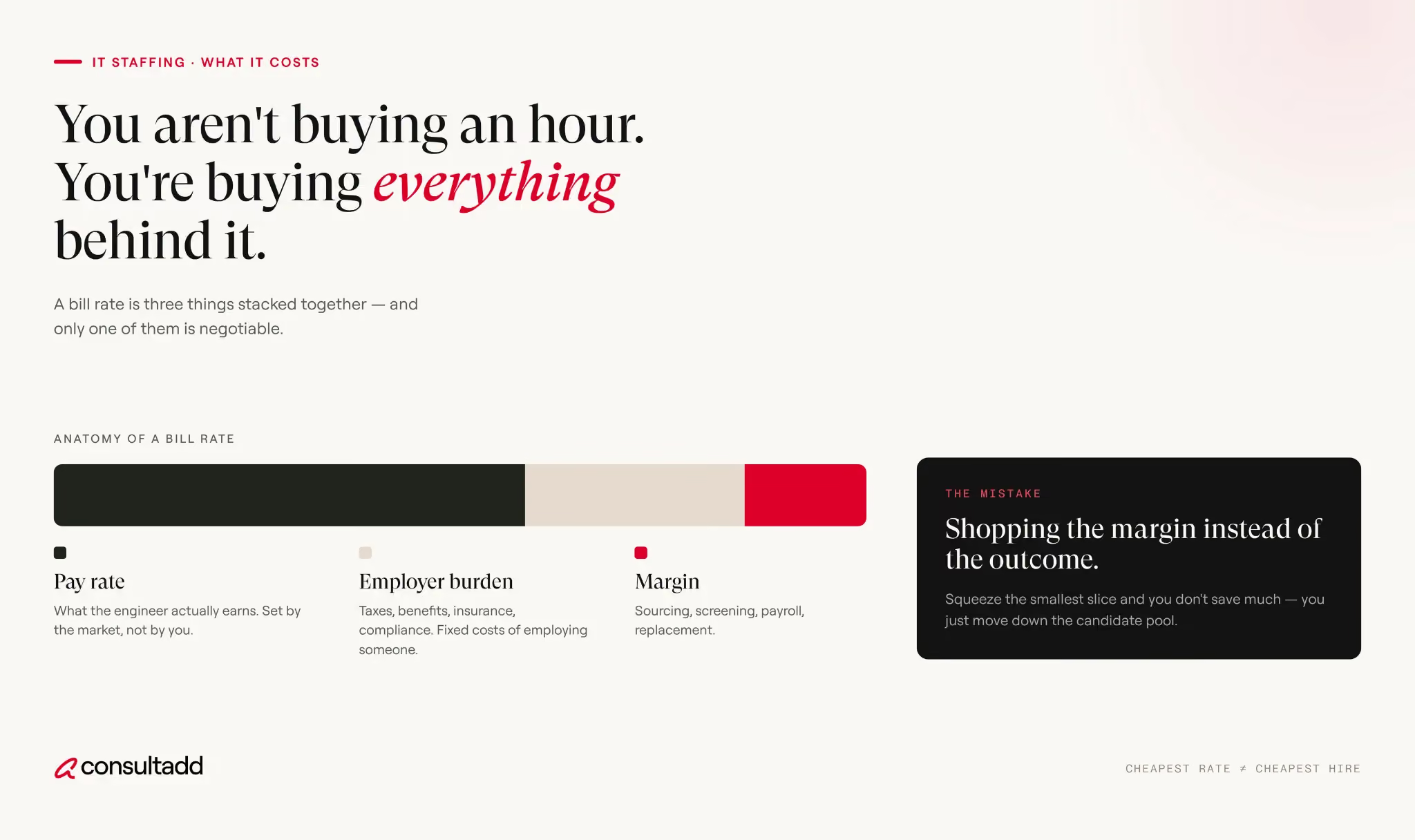
The number a staffing partner quotes is a bill rate, usually hourly. It is not a markup on a salary figure.
A bill rate bundles the worker's pay, employer payroll taxes, unemployment insurance, workers' compensation, any benefits the agency provides, insurance, and the agency's margin.
Comparing a $95 hourly bill rate against a $150,000 base salary is comparing a loaded cost against an unloaded one, and it makes staffing look more expensive than it is.
Better comparisons to run:
- Bill rate against fully loaded internal cost, including benefits, payroll taxes, and your share of recruiting and onboarding time.
- Cost of an unfilled seat against the premium. A senior engineering req open for three months has a real number attached to it.
- Cost of a wrong permanent hire against a contract-to-hire trial.
Ask for the bill rate breakdown. A partner who won't show you what sits inside it is a partner who is hard to hold accountable.
The buyer's guide to IT contract staffing goes deeper on rate structures.
When remote staffing is the wrong answer
Being honest about the limits:
- Work that needs physical access. Data center, lab, hardware, and some regulated environments don't go remote regardless of preference.
- Roles with heavy real-time collaboration across wide time zones. A four-hour overlap window can work. A two-hour one usually doesn't for pairing-intensive work.
- Entry-level hiring you intend to develop. The postings data shows how thin remote junior hiring is, and mentorship is harder to deliver at distance.
- Teams without written process. Distributed work exposes weak documentation immediately. If decisions live in hallway conversations, adding remote contractors will surface that fast.
Any vendor who tells you remote works everywhere is selling, not advising.
How to evaluate a remote IT staffing partner
Questions that separate serious partners from resellers.
If work authorization is part of your picture, note that job title, duties, and worksite have to stay consistent across immigration filings and the actual role.
Consultadd's H1B sponsorship guide explains why consistency matters more than people expect, particularly for remote placements where the worksite question gets complicated.
For a wider view of how the market is moving, the IT staffing trends breakdown covers where demand is concentrating.
Where to start
Remote IT staffing services are worth buying when two things are true:
You need skills that aren't available locally, and you don't want to stand up employer infrastructure in every state your team happens to live in. The second point is the one that gets underestimated.
Decide the engagement model first, then price it against a fully loaded internal cost rather than a base salary, then interrogate the compliance answers.
A partner who can name the states they're registered in and show you inside the bill rate is usually the one who will still be easy to work with in month nine.
Start Strong With Consultadd
With 15 years in business and 5,000+ successful staffing engagements, we don't just fill roles, we build reliability into your process. We've supported 65 staffing companies in the past year alone and maintain MSAs with industry leaders like Robert Half and TEKsystems.
Here's what working with Consultadd looks like:
- Talent sourced in under 24 hours
- Ready-to-deploy candidates, vetted for experience and compliance
- Lower turnover risk: we match long-term goals, not just short-term needs
- Seamless compliance: visa, documentation, onboarding? Handled.
- Dedicated 1:1 account managers for responsive, personalized support
- Top 100 candidate matches delivered in the past year
- Strong partnerships with universities to tap into fresh, committed talent
- Post-placement support so your investment grows beyond day one
For candidates, your next opportunity is more than just a job title, it's a chance to build skills, gain experience, and move your career forward. At Consultadd, we connect technology professionals with projects and employers that align with their goals, whether they're looking for contract, contract-to-hire, or long-term opportunities.
The tech job market moves fast, but the right guidance can make all the difference. Ready to take the next step in your career journey? Explore Opportunities >>
Key takeaways
- Remote postings are a small share of all tech hiring, around 4% fully remote in Robert Half's Q2 2026 technology data, but demand within the remote segment grew sharply in the same period.
- What you're primarily outsourcing is multi-state employment compliance, which attaches with the first hour of work in a new state and has no dollar threshold.
- Contract, contract-to-hire, staff augmentation, and direct hire differ on who employs the worker and where the risk sits. Choose the model before the vendor.
- Compare bill rates to fully loaded internal cost, never to base salary, and ask for the rate breakdown in writing.
- Remote is a poor fit for physical-access work, wide time zone splits, and entry-level development roles. A partner who admits that is more useful than one who doesn't.
FAQs
What are remote IT staffing services?
They are arrangements where a staffing agency sources, employs, and payrolls technology professionals who work remotely for a client company. The agency holds the W-2 and carries state registration, withholding, unemployment insurance, and workers' compensation obligations. The client directs the work.
How is this different from outsourcing?
Staffing gives you people who work inside your team and under your direction, while you keep ownership of the output. Outsourcing or managed services hands a defined scope of work to a vendor who owns delivery. The distinction determines who is accountable when something ships late.
Does hiring one remote employee create tax obligations in their state?
Generally yes. Payroll tax nexus typically attaches as soon as work is performed in a state, with no revenue threshold, and can trigger employer registration, income tax withholding, unemployment insurance, and workers' compensation there. Confirm your specific situation with a tax advisor.
How fast can a remote IT role be filled?
For common skill sets with an active bench, first submittals often come within days. For scarce specialties like ML engineering or cloud security, expect longer, and expect the bill rate to reflect scarcity. Ask any prospective partner for their average time to first qualified submittal by role type.
Is remote staffing cheaper than hiring directly?
Not always, and the comparison is frequently done wrong. Bill rates include employment taxes, insurance, and margin that a base salary figure excludes. Remote staffing usually wins on speed, flexibility, and avoided compliance overhead rather than on raw hourly cost.
Can remote contractors convert to permanent employees?
Yes, that's the contract-to-hire model. The client typically pays a conversion fee, or the fee drops to zero after the worker has billed a set number of hours. Get the fee schedule in writing before the engagement starts rather than negotiating it later.



.png)