.avif)

Introduction
Most people asking this question are waiting on a report right now. So here's the direct answer: what causes a red flag on a background check is usually a mismatch, not a crime.
Dates that don't line up. A job title that reads differently in the employer's HR system than on your resume. A degree the registrar can't confirm. A name or Social Security number that doesn't tie cleanly to your records.
Actual criminal findings do come up, and they matter. But according to iprospectcheck's 2026 State of Screening report, more than half of employers, 54.1%, say background checks turn up discrepancies "very often" or "somewhat often," and criminal history omissions are both the most common serious issue at 17.0% and the finding most likely to end a candidacy at 30.2%.
Read that second stat carefully. The omission was the problem, not just the record.
This covers what actually triggers a flag, what employers are legally allowed to do with it, and what happens next.
TL;DR
- The most common red flags are inconsistencies in employment dates, job titles, education, and identity, not criminal records.
- Failing to disclose something that later surfaces damages your candidacy more than the underlying fact usually does.
- Federal law caps how long most negative non-conviction information can be reported at seven years, and bankruptcies at ten.
- A flag is not a rejection. Employers must send a pre-adverse action notice with a copy of the report and give you a real chance to dispute it.
- Errors in background reports are common enough that the dispute process exists specifically for them, and the reporting agency generally has 30 days to reinvestigate.
What a red flag actually is
A red flag is something in a report that doesn't match what the employer expected, or that raises a question the employer now has to answer. It's a prompt for a follow-up conversation, not a verdict.
That distinction gets lost because candidates hear "the background check came back with an issue" and assume the offer is gone. Often it isn't.
Screening companies flag anything inconsistent, including their own data errors and cases of mistaken identity.
There's also no such thing as a universal pass or fail. A ten-year-old misdemeanor might be irrelevant for a software role and disqualifying for a job handling cash or working with children. Relevance to the specific position is the whole game.
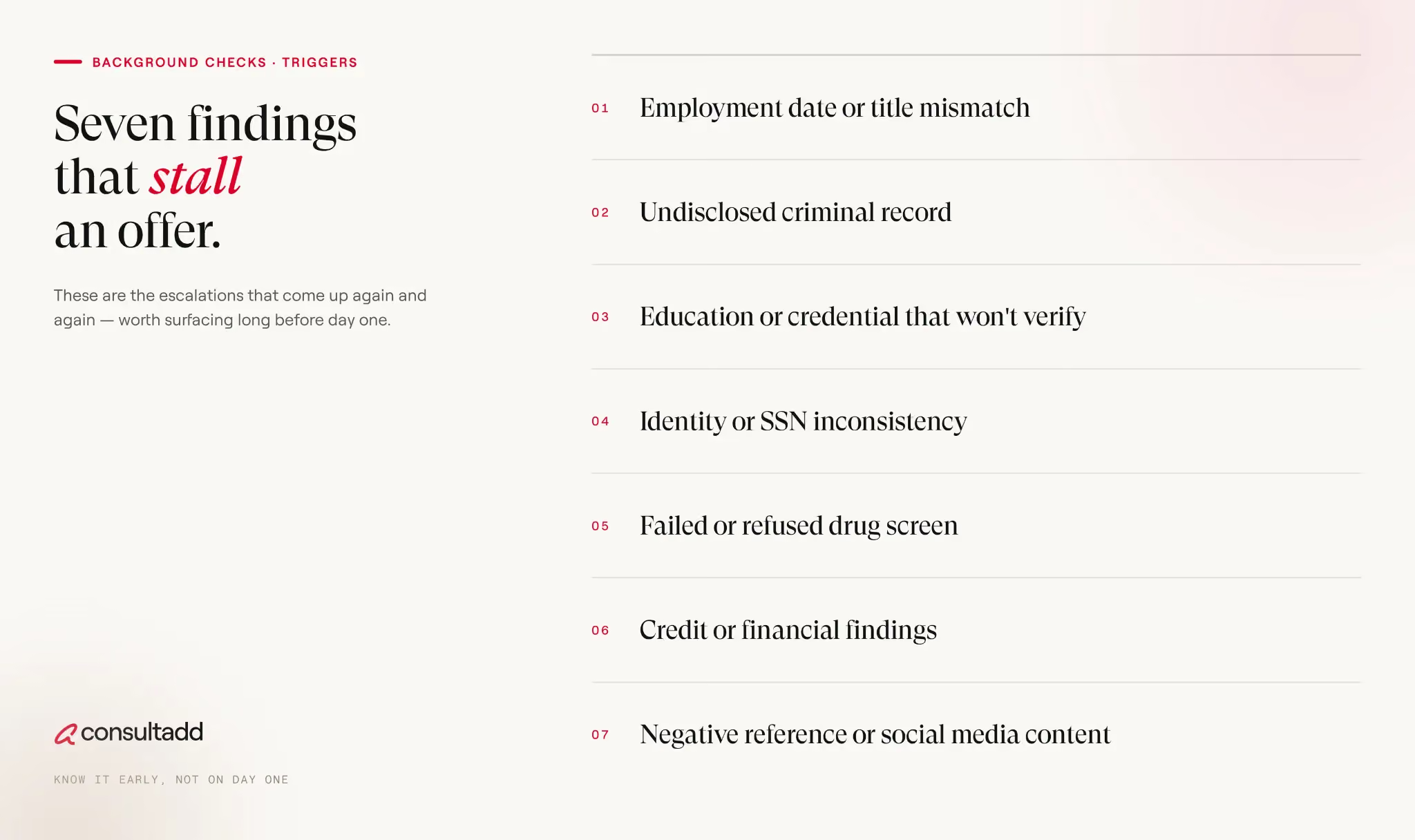
What most often causes a red flag on a background check
Roughly in order of how frequently they show up:
1. Employment history that doesn't line up
This is the biggest single category and most of it is honest error.
You remember starting in March, HR has you down for April. You were promoted to Senior Analyst but the payroll record still says Analyst. The company was acquired and the entity name changed.
None of that is disqualifying. It becomes a problem when there are several mismatches at once, or when a role you listed doesn't verify at all.
Gaps are a related but separate issue. A gap is not a red flag by itself. An unexplained gap next to a discrepancy sometimes is, because the two together suggest something was smoothed over.
2. An undisclosed criminal record
The data is clear that omission is what does the damage. An employer who finds a record you already mentioned is evaluating the record. An employer who finds one you didn't mention is now evaluating your honesty, and that's a much worse position to be in.
Worth knowing: the EEOC has taken the position that an arrest record alone isn't proof that conduct occurred, and its enforcement guidance recommends an individualized assessment weighing the nature and gravity of the offense, the time that has passed, and whether it relates to the job.
That guidance is EEOC policy rather than statute, and parts of it have been challenged in court, but many employers build their adjudication process around it anyway. The full document is on the EEOC's site.
3. Education and credentials that won't verify
Degrees, certifications, and professional licenses get verified directly with the issuing institution.
Common causes of a flag here are a degree listed as completed when coursework was finished but the degree never conferred, a name change the registrar has under a different record, and a school that has closed.
Inventing a credential is a different matter. That one usually ends the process, because it's unambiguous.
4. Identity mismatches
If your name, date of birth, or SSN doesn't tie cleanly across records, the screening company may not be able to link the right records to you at all.
Maiden names, transliterated spellings, and suffixes cause a lot of this. It's typically the easiest category to fix and the most annoying, because it delays everything.
5. Drug screening
A failed test, a refusal, or a missed appointment reads as a flag.
In DOT-regulated roles, healthcare, and safety-sensitive positions, it's often disqualifying by regulation rather than employer choice.
6. Credit and financial history
Only relevant for some roles, generally those with fiduciary duties or direct access to funds.
Several states restrict employment credit checks entirely. A single collection account is not what employers are looking at; patterns are.
7. References and social media
Vague or reluctant references raise questions.
On social media, employers who screen are looking at a narrow set of things: screening focuses on specific red flags like threats or violent content (17.8%) and hate speech (14.6%), while political views barely register at 1.9%.
A large share of employers, 37.6%, don't screen social media at all.
What can't be used against you
Federal law limits what a screening company may report. Section 605 of the Fair Credit Reporting Act, at 15 U.S.C. § 1681c, sets the clocks.
Two important qualifications:
- First, those seven and ten year caps generally don't apply when the role is expected to pay $75,000 a year or more.
- Second, state law frequently goes further than federal law. Several states cap conviction reporting at seven years regardless of salary.
California bars reporting non-conviction arrests. Massachusetts limits the misdemeanor lookback to three years. Philadelphia cut its misdemeanor window to four years effective January 2026, and Virginia's clean slate law began sealing records automatically in July 2026.
Practical upshot: which rules apply usually depends on where the job is, not where you live. And expunged or sealed records shouldn't appear on a compliant report at all.
There are also front-end requirements. Before pulling a report, an employer has to give you a clear standalone written disclosure and get your written authorization.
Burying that language inside a job application alongside liability waivers has generated a lot of class action litigation.
How a red flag is supposed to be handled
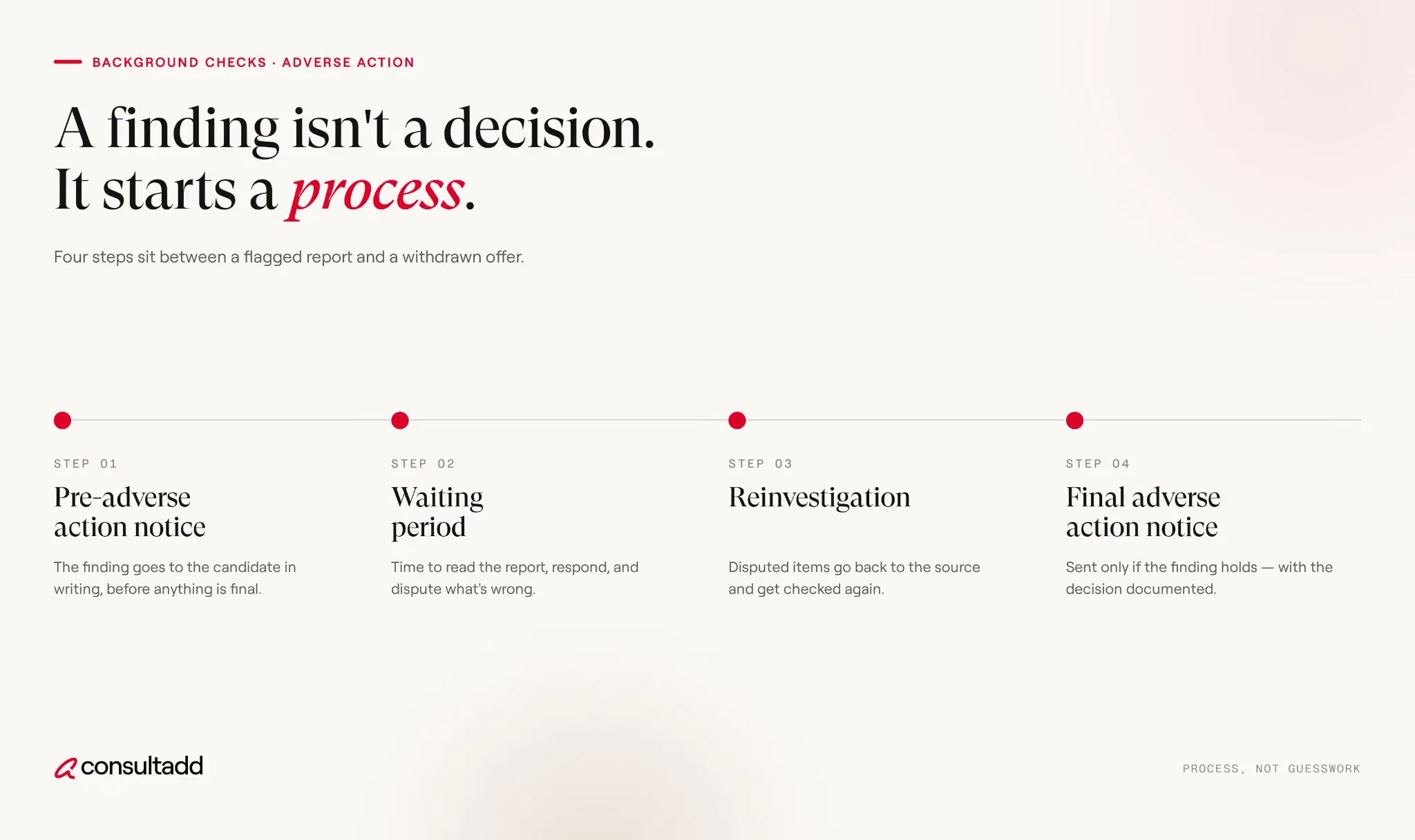
If an employer is leaning toward a no because of something in the report, the FCRA requires a two-notice sequence. This exists precisely because reports contain errors.
If an employer skipped the notices, or pulled your report without authorization, the EEOC's page for job applicants and employees explains where to take that. The joint EEOC and FTC guidance on what employers need to know covers the employer side.
What to do if something flags on yours
The window between the two notices is short. Use it.
- Get the actual report, not a recruiter's summary of it. You're entitled to the document the employer relied on.
- Separate errors from facts. An error goes to the reporting agency as a formal dispute. A fact goes to the employer as context.
- Send documents, not explanations. A W-2 settles an employment date argument faster than any paragraph you write.
- Be specific and brief with context. What happened, when, what changed since. Don't argue about relevance; state the facts and let the employer weigh them.
- Respond in writing and keep copies. If timing becomes an issue later, you'll want the record.
- Don't volunteer new problems. Answer what was asked, accurately and completely.
The single best move happens earlier though: disclose before the check runs. A record you mention in the interview is a fact. The same record discovered in week three is a credibility question.
For employers and recruiters: cutting down false flags
Most flags a hiring team spends time on aren't real risks.
- Ask for exact dates and prior job titles on the application, and tell candidates the answers will be verified. Accuracy improves immediately.
- Give candidates a chance to disclose before screening rather than after.
- Set an adjudication matrix in advance that maps offense type and age to specific roles. Deciding case by case with no framework is where inconsistency, and legal exposure, comes from.
- Apply the same waiting period to every candidate. Inconsistent timing is a pattern plaintiffs' attorneys look for.
- Treat a discrepancy as a question, not a conclusion. The clerical explanation is usually the right one.
If you're placing contract or contract-to-hire talent, screening timelines sit on the critical path to a start date.
The contract-to-hire model shifts much of that verification onto the staffing agency, which is one reason conversions tend to move faster than fresh permanent hires.
For candidates who also need work authorization verified, screening and immigration paperwork run in parallel and both have to be internally consistent.
Consultadd's guide to H1B sponsorship explains why job title and duties need to match across every document.
The short version
What causes a red flag on a background check is most often a gap between what you said and what a record says, and most of those gaps are clerical. The ones that end candidacies tend to involve something the candidate chose not to mention.
If a flag comes up on yours, you have a defined right to see the report and respond before anything becomes final. Reports contain errors often enough that this step is worth taking seriously rather than assuming the worst.
None of this is legal advice, and screening rules vary by state and industry. For a specific situation, talk to an employment attorney in the relevant jurisdiction.
Start Strong With Consultadd
With 15 years in business and 5,000+ successful staffing engagements, we don't just fill roles, we build reliability into your process. We've supported 65 staffing companies in the past year alone and maintain MSAs with industry leaders like Robert Half and TEKsystems.
Here's what working with Consultadd looks like:
- Talent sourced in under 24 hours
- Ready-to-deploy candidates, vetted for experience and compliance
- Lower turnover risk: we match long-term goals, not just short-term needs
- Seamless compliance: visa, documentation, onboarding? Handled.
- Dedicated 1:1 account managers for responsive, personalized support
- Top 100 candidate matches delivered in the past year
- Strong partnerships with universities to tap into fresh, committed talent
- Post-placement support so your investment grows beyond day one
For candidates, your next opportunity is more than just a job title, it's a chance to build skills, gain experience, and move your career forward. At Consultadd, we connect technology professionals with projects and employers that align with their goals, whether they're looking for contract, contract-to-hire, or long-term opportunities.
The tech job market moves fast, but the right guidance can make all the difference. Ready to take the next step in your career journey? Explore Opportunities >>
Key takeaways
- Inconsistencies in employment dates, titles, education, and identity cause more flags than criminal records do.
- Omission is the real risk: criminal history omissions are the finding most likely to end a candidacy, at 30.2%.
- Non-conviction arrests, civil judgments, collections, and paid tax liens generally fall off after seven years, and bankruptcies after ten, though those caps usually lift for roles paying $75,000 or more.
- State and city rules often run tighter than federal law, and the job's location usually determines which apply.
- A pre-adverse action notice is your window to correct errors, and the reporting agency generally has 30 days to reinvestigate a dispute.
FAQs
What is the most common reason people fail a background check?
Discrepancies between what a candidate reported and what records show, most often employment dates and job titles. Over half of employers say they see discrepancies often. Outright disqualifying findings are less frequent than mismatches that simply needed explaining.
Do employment gaps show up as red flags?
A gap on its own is not a red flag, and screening reports don't editorialize about them. Gaps draw attention when they sit next to a discrepancy or when a candidate can't account for the period. Having a short, factual explanation ready is usually enough.
How far back does a background check go?
Under federal law, non-conviction arrests, civil judgments, collections, and paid tax liens are limited to seven years, and bankruptcies to ten. Convictions have no federal time limit, though several states cap them at seven years. The seven and ten year caps generally don't apply to roles expected to pay $75,000 or more.
Can an employer reject me without telling me why?
Not if the decision is based on a report from a third-party screening company. The FCRA requires a pre-adverse action notice with a copy of the report and a summary of your rights, a reasonable period to respond, and then a final adverse action notice.
What if the background check has wrong information about me?
Dispute it with the consumer reporting agency named on the report. They must reinvestigate, generally within 30 days, and remove information they can't verify. Tell the employer in writing at the same time so they know a dispute is pending before they finalize anything.
Should I disclose a criminal record before the check runs?
Generally yes, though timing depends on local law, since some states and cities bar employers from asking until later in the process. When the subject comes up, being upfront is consistently better than being discovered. The data shows omission harms candidacies more than the records themselves.
.webp)


.webp)