

Introduction
You're filling out an immigration form, it asks for your "visa number," and your passport page is suddenly a wall of numbers: one on the bio page, two or three on the visa sticker itself, another on some USCIS notice in your email.
Which one is it? Here's the direct answer: the visa number on a US visa is the red number printed in the lower right corner of the visa stamp (also called the visa foil) in your passport. It's usually eight digits, and it's the only number on the stamp printed in red.
That's genuinely most of what you need. But the reason this question gets asked millions of times a year is that US immigration paperwork surrounds you with lookalike identifiers, and entering the wrong one can delay an application.
So this guide covers where the number sits, what it does, how it differs from every other number you're juggling, and the second, completely different meaning of "visa number" that trips up green card applicants.
TL;DR
- The visa number (also called the visa foil number) is the red number in the bottom right of your US visa stamp, typically 8 digits, sometimes one letter followed by seven digits.
- Simple rule: if the number isn't red, it isn't your visa number. The black control number elsewhere on the stamp is a different identifier.
- It's a randomly generated tracking number for that specific visa sticker, not for you personally; a renewed visa gets a brand-new number.
- It's different from your passport number, A-Number, USCIS receipt number, I-94 number, and case ID, and forms occasionally need each of these.
- In green card contexts, "visa number" can instead mean an available immigrant visa slot under the monthly Visa Bulletin, an entirely separate concept.
What is the visa number on a US visa?
Think of it as a serial number for the sticker itself. When a US embassy or consulate approves your visa, it prints a foil (the official term for the sticker) into your passport, and that foil carries a unique identifier: the visa number. Federal agencies use it to pull up the record of that specific visa in their systems, and CBP officers reference it when verifying your authorization at the border.
Three characteristics worth knowing:
- It's random. The digits don't encode your visa type, the consulate, or anything about you. An H-1B visa number looks no different from an F-1 or B-1/B-2 number.
- It belongs to the foil, not to you. Renew your visa and the new foil carries a completely new number; the old one simply remains on the expired stamp as history.
- It exists only on paper. There's no online lookup for it. If you need it, you need the physical passport (or a good scan of the visa page, which is an excellent reason to keep one).
It's also personal data worth guarding. Share it with government agencies, your employer's immigration counsel, or accredited legal representatives, and nobody else.
Reading your visa stamp: where everything sits
A US visa foil packs a lot into a small rectangle. Here's the map:
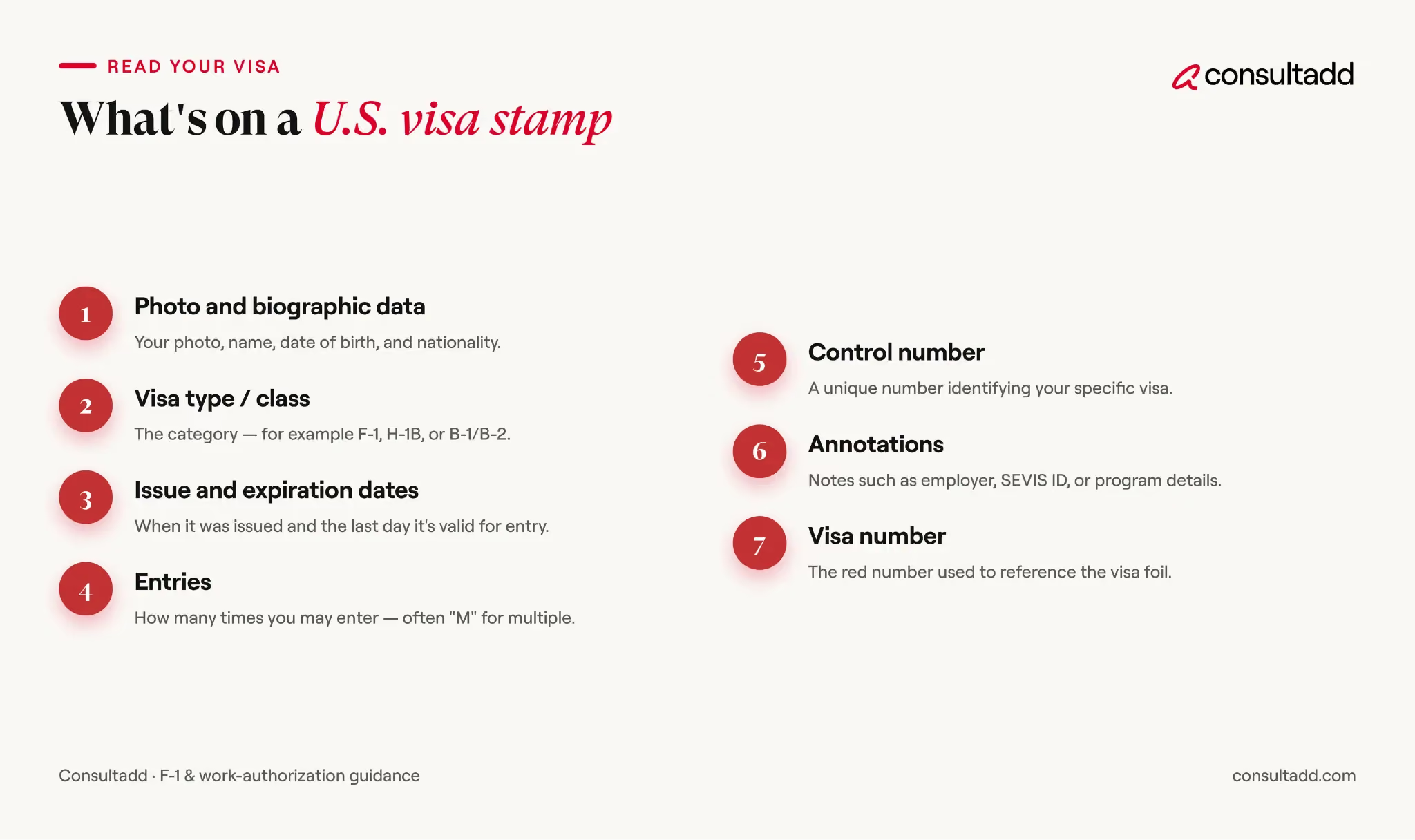
The red ink is deliberate: everything else on the foil prints in black, so the one identifier you'll be asked for most often stands out at a glance. Older visas sometimes show a letter followed by seven digits; the format has been standardized toward eight digits over time.
On immigrant visas, you'll also find your A-Number printed on the foil, labeled as the registration number.
Visa number vs every other number
This table is the part worth bookmarking, because mixing these up is the number-one cause of form errors:
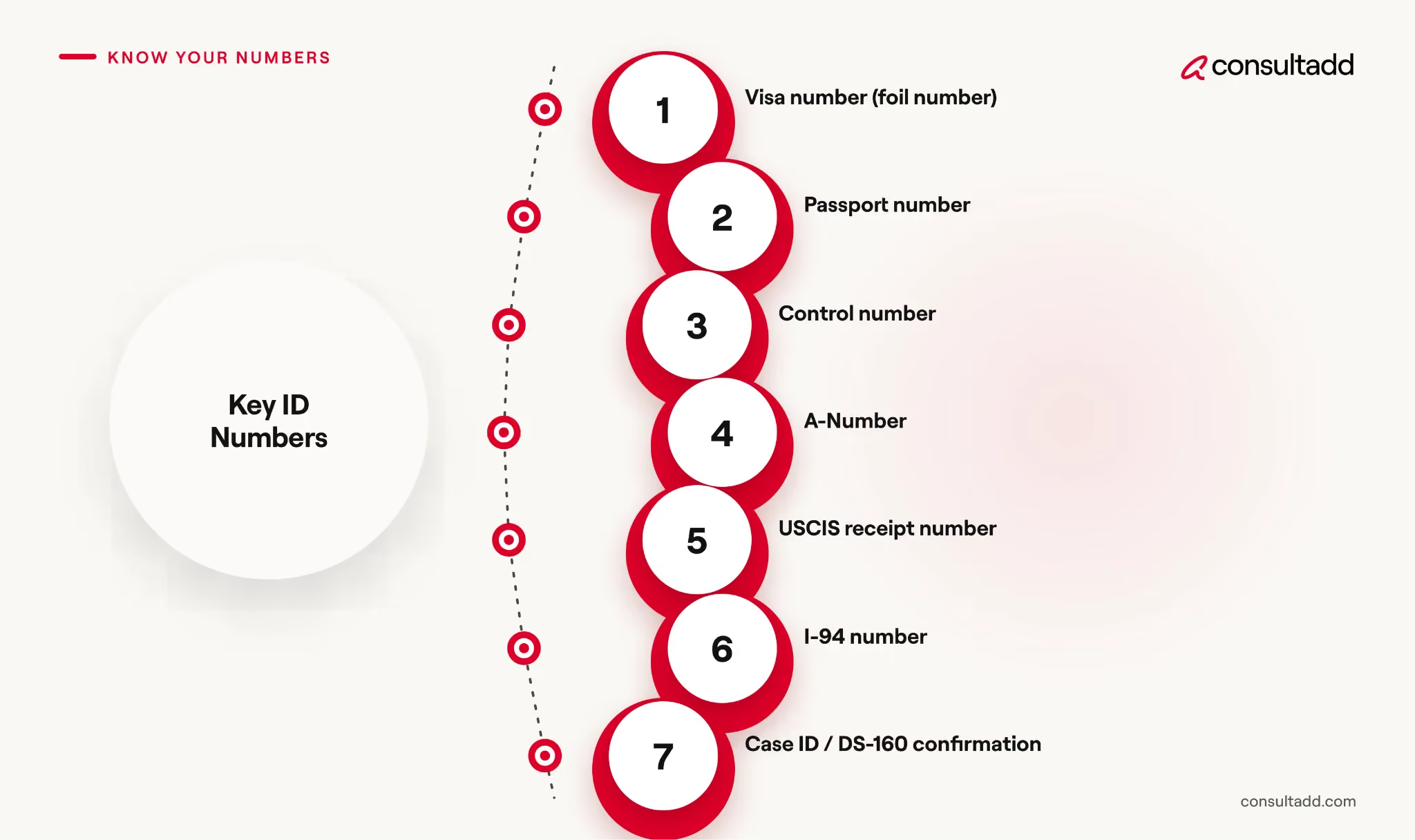
The one-line rules that resolve 95% of confusion: red means visa number. The bio page means passport number. "A" prefix means A-Number. Three letters then ten digits means receipt number.
When you actually need your visa number
Honestly, less often than people expect, which is part of why nobody memorizes it. The situations where it comes up:
- USCIS immigration forms. Applications like the I-485 (adjustment of status) and others ask for the nonimmigrant visa number from your most recent entry. Enter it exactly as printed, red number only.
- Visa renewals and DS-160 applications. The form asks whether you've previously held a US visa and for that visa's number.
- Certain border and consular interactions. Officers reference it to pull your visa record, though they read it off the foil themselves.
What it's not needed for: checking your I-94, applying for a Social Security number, opening a bank account, or proving work authorization day to day.
When a form asks for a number and you're unsure which, match the format: if the field wants 8 digits and you're holding a 13-character receipt number, you've got the wrong identifier.
Lost visas, renewals, and common mistakes
- Lost or stolen passport with a visa inside. Report it to local police and notify the US embassy or consulate (or the State Department) so the visa can be flagged. The visa can't be transferred or reprinted; you'll apply for a new one, which will carry a new number.
- Faded or unreadable number. It happens on older, well-traveled passports. Don't guess. A consulate, your attorney, or in some cases your employer's immigration file will have the number on record from issuance.
- Expired visa, valid stay. A common and legitimate situation: your visa foil (entry document) can expire while your authorized stay (I-94) continues. The old foil's number remains your answer for "most recent visa number" on forms until a new visa is issued.
- The classic mistakes, in descending order of frequency: submitting the black control number instead of the red visa number, submitting the passport number, using an old visa's number after a renewal, and confusing foil numbers with Visa Bulletin availability. Each is avoidable with one glance at the ink color and one check of which foil is current.
The whole topic rewards two minutes of prevention: scan your passport bio page and every visa page, store the scans securely, and note which numbers are which. Future you, filling out a form at 11 pm the night before a deadline, will be grateful.
Start Strong With Consultadd
With 15 years in business and 5,000+ successful staffing engagements, we don't just fill roles, we build reliability into your process. We've supported 65 staffing companies in the past year alone and maintain MSAs with industry leaders like Robert Half and TEKsystems.
Here's what working with Consultadd looks like:
- Talent sourced in under 24 hours
- Ready-to-deploy candidates, vetted for experience and compliance
- Lower turnover risk: we match long-term goals, not just short-term needs
- Seamless compliance: visa, documentation, onboarding? Handled.
- Dedicated 1:1 account managers for responsive, personalized support
- Top 100 candidate matches delivered in the past year
- Strong partnerships with universities to tap into fresh, committed talent
- Post-placement support so your investment grows beyond day one
For candidates, your next opportunity is more than just a job title, it's a chance to build skills, gain experience, and move your career forward. At Consultadd, we connect technology professionals with projects and employers that align with their goals, whether they're looking for contract, contract-to-hire, or long-term opportunities.
The tech job market moves fast, but the right guidance can make all the difference. Ready to take the next step in your career journey? Explore Opportunities >>
Key takeaways
- The visa number on a US visa is the red, usually 8-digit number in the lower right corner of the visa stamp; if the ink isn't red, it's not your visa number.
- It's a randomly generated serial number for that specific foil, carries no encoded meaning, and changes with every renewal.
- Keep it distinct from your passport number, control number, A-Number, USCIS receipt number, and I-94 number; each serves a different system and forms may ask for any of them.
- You'll need it mainly on USCIS forms, visa renewal applications, and employer immigration files; it can't be looked up online, so keep a secure scan of your visa page.
- In green card contexts, "visa number availability" refers to quota slots under the monthly Visa Bulletin, a completely separate concept from the number on your foil.
FAQs
Where is the visa number on a US visa?
It's printed in red ink in the lower right corner of the visa stamp (foil) in your passport. It's typically eight digits, and since everything else on the stamp prints in black, the red ink makes it easy to spot.
Is the visa number the same as the passport number?
No. Your passport number is issued by your home country and appears on your passport's bio page. The visa number is assigned by the US when your visa is issued and appears only on the visa stamp itself. Forms that ask for both want them in separate fields.
Is the control number the same as the visa number?
No. The control number is the longer black number on the visa stamp, used internally by the State Department. When a form asks for your visa number, the control number is always the wrong answer; only the red number qualifies.
Does my visa number change when I renew my visa?
Yes. Each physical foil receives its own unique number, so a renewed visa carries a brand-new one. The old number stays on the expired stamp as a historical record, and forms asking for your most recent visa number want the current foil.
Can I find my visa number online?
No. Unlike your I-94 record, which is retrievable on the CBP website, the visa number exists only on the physical stamp in your passport. That's why keeping a secure scan of your visa page is worth doing the day you receive it.
What does "waiting for a visa number" mean for a green card?
That phrase uses the other meaning of the term: an immigrant visa slot under the annual caps Congress sets. Availability is published monthly in the State Department's Visa Bulletin, and applicants must wait until their priority date becomes current. It has nothing to do with the red number on a visa stamp.
.webp)


.png)

.webp)