


Introduction
The words sound interchangeable in casual conversation, but the contract worker vs employee distinction is one of the most consequential lines in US labor law. It determines who pays your taxes, who covers you if you get hurt on the job, whether you're entitled to overtime, and whether the company can be sued for treating you like an employee while paying you like a contractor.
Get the label wrong, on either side, and the consequences show up at tax time, in a workers' comp claim, or in a federal audit.
The distinction has also become genuinely unstable at the regulatory level. The Department of Labor paused enforcement of its 2024 classification rule, then in February 2026 proposed rescinding it entirely in favor of a simpler, contractor-friendlier test.
Meanwhile states like California, Massachusetts, and New Jersey run their own stricter rules regardless of what Washington decides. Companies and workers operating across state lines are, in practice, complying with the strictest rule that touches them.
This guide lays out what actually separates the two categories, compares taxes, benefits, cost, and legal protections side by side, and walks through where the classification rules stand in 2026.
TL;DR
- The legal test isn't the contract's label; it's control and economic reality. Who directs the work, and is the worker economically dependent on this one company, or running their own business.
- Employees get tax withholding, benefits eligibility, and legal protections (minimum wage, overtime, unemployment, workers' comp); contractors get flexibility and higher gross pay but none of that safety net.
- Employers save roughly 20-30% on top of wages by using contractors correctly, since payroll taxes, benefits, and insurance shift to the contractor.
- Federal rules are in flux: DOL paused 2024's worker-friendly test and proposed a simpler, two-factor standard in February 2026, with a final rule still pending as of mid-2026.
- State law often overrides federal flexibility. California's ABC test, and similar rules in Massachusetts and New Jersey, remain the strictest classification standards in the country regardless of federal changes.
What actually separates a contract worker from an employee
Here's the fact that surprises most people: what your offer letter or contract calls you doesn't determine your legal classification. Courts and agencies look at the actual working relationship, and the analysis boils down to two core questions the DOL's current and proposed frameworks both center on.
Control : Who decides how, when, and where the work gets done?
An employee typically works set hours, follows company procedures, uses company equipment, and reports to a supervisor who directs the day-to-day work. A genuine independent contractor sets their own methods and schedule, subject only to the deliverable and deadline the contract specifies.
Economic reality: Is the worker economically dependent on this one company, or are they in business for themselves?
A contractor with multiple active clients, their own equipment, and their own marketing is running a business. Someone with one client, told when to log in, and given a company laptop looks like an employee regardless of what the contract says.
Everything else, permanency of the relationship, whether the work is central to the company's core business, whether specialized skill is involved, feeds into that same core analysis as supporting evidence, not as an independent trump card.
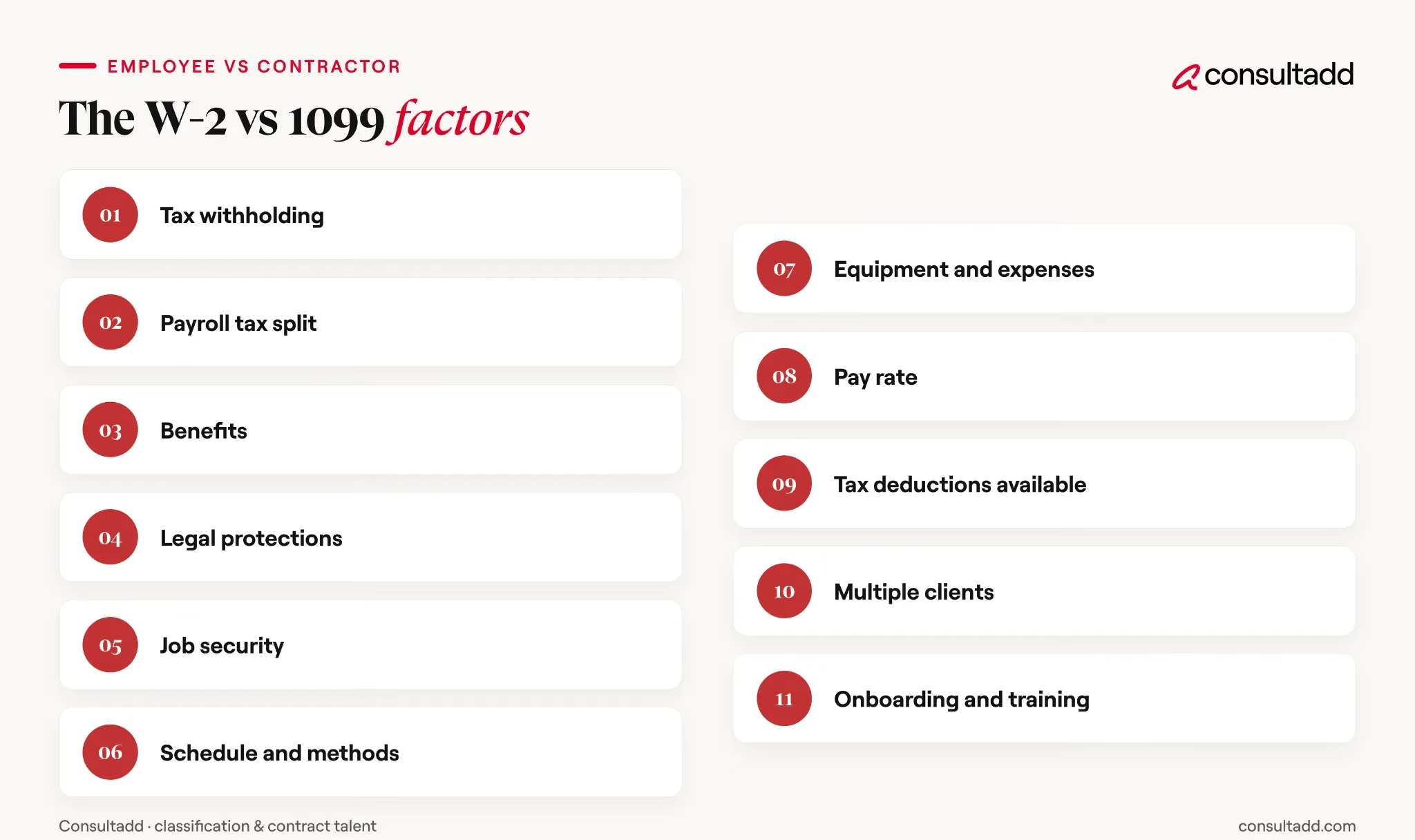
Contract worker vs employee: full comparison
Side by side, here's where the categories genuinely diverge:
Notice how consistently the pattern holds: nearly every employee advantage (protections, benefits, stability) corresponds to an employer obligation, and nearly every contractor advantage (rate, flexibility, deductions) corresponds to something the worker now has to handle themselves. Neither side of the table is free money; it's a transfer of responsibility with real trade-offs on both ends.
What each classification costs an employer
For companies deciding how to structure a role, the honest math looks like this:
Hiring an employee typically adds 20-30% on top of base salary once you count the employer's half of payroll taxes, benefits (health insurance, retirement matching), workers' comp insurance, unemployment insurance contributions, paid time off, and the administrative cost of running payroll and HR compliance.
Hiring a contractor removes most of that overhead, but not the responsibility to structure the relationship correctly. A contractor paid a higher gross rate with no benefits often costs a company less overall than an equivalent-salary employee, precisely because the payroll tax, insurance, and benefits burden shifted to the contractor's side.
The trade-off companies frequently underweight: contractors bring flexibility (scale up for a project, scale down when it ends) that employees structurally can't offer, which is exactly why contract and contract-to-hire models have become a deliberate strategy rather than a stopgap for many companies managing fluctuating technical needs.
We made the fuller case for that approach in IT contract staffing is a business strategy, not a backup plan, and for a closer look at how contractor arrangements get structured through business entities specifically, our guide to what is C2C employment covers the corp-to-corp variant common in IT staffing.
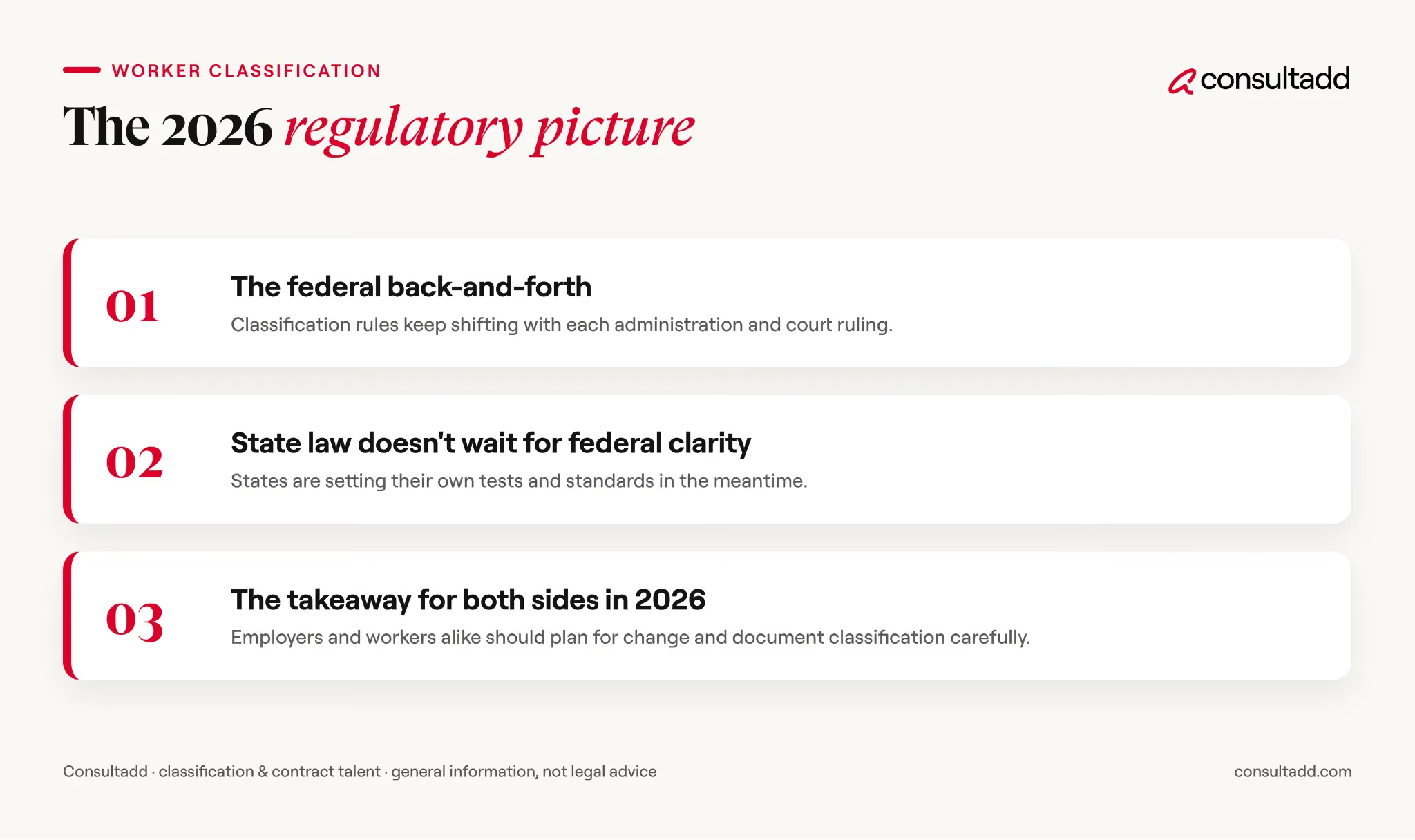
The 2026 regulatory picture
This is where the ground has genuinely shifted, and it's worth understanding regardless of which side of the relationship you're on.
The federal back-and-forth:
In January 2024, the DOL finalized a rule using a broad "totality of the circumstances" test with six factors, widely viewed as making it harder to classify someone as a contractor. That rule faced enforcement pushback and was effectively paused in 2025.
Then, on February 26, 2026, the DOL published a new proposed rule that would rescind the 2024 framework entirely and replace it with a simpler, two-core-factor test centered on control and opportunity for profit or loss, similar to a 2021 approach.
Under the proposal, actual day-to-day practice matters more than contract language, but routine requirements like insurance, safety compliance, and meeting agreed deadlines don't by themselves push a worker toward employee status. Public comments closed April 28, 2026, and as of mid-2026 the rule remains proposed, not final.
State law doesn't wait for federal clarity:
California's ABC test, codified through AB 5 and refined by AB 1514 (effective January 1, 2026, adjusting certain professional exemptions), remains one of the strictest classification standards in the country: a worker is presumed an employee unless the company proves all three prongs, freedom from control, work outside the company's usual business, and an independently established trade.
Massachusetts and New Jersey run comparably strict tests. The practical result for any multi-state employer: comply with the most protective standard touching each worker, because a federal proposal loosening the national floor changes nothing in states that set a higher one.
The takeaway for both sides in 2026:
Treat the classification question as unsettled and audit-worthy, not resolved. A worker or company confident in their classification under last year's rule should re-examine it under both the emerging federal standard and whichever state law applies.
Misclassification: the risk on both sides
Misclassifying an employee as a contractor, deliberately or by accident, exposes a company to back taxes, unpaid overtime, unemployment insurance contributions, and penalties that can multiply quickly across a workforce.
The core exposure hasn't changed even as the federal test evolves: regulators and courts look at the real relationship, not the contract's title, so a company that directs a "contractor's" schedule, provides their equipment, and treats them like staff in every practical sense carries real risk regardless of the paperwork.
For workers, misclassification cuts the other way: lost overtime pay, no unemployment insurance if the relationship ends, no workers' comp coverage if injured on the job, and no employer contribution to payroll taxes that were, legally, owed.
The safest posture for companies, regardless of which federal test ultimately survives: make the classification match the reality. If a role requires set hours, company equipment, exclusive availability, and close supervision, it's an employee role, and structuring it as a 1099 contract doesn't change that underneath the label.
Which one is right for you?
For workers, the choice usually comes down to what you value more. Employment fits if you want predictable income, employer-paid benefits, and legal protections without the administrative load of running a business. Contracting fits if you're experienced enough to manage your own pipeline, comfortable with variable income, and want the higher gross rate and tax flexibility that comes with self-employment.
For companies, the decision should follow the nature of the work, not just the cost comparison. Ongoing, core, closely supervised work belongs in an employee role; project-based, specialized, or fluctuating-capacity work is a legitimate fit for contractors, provided the relationship is actually structured that way in practice, not just on paper.
Getting this right protects both the worker's rights and the company's compliance position, and it's the same judgment call that shapes good hiring strategy generally, something we cover in more depth in our guide to hiring and recruiting strategies.
Whichever side of the relationship you're on, the rule that survives every regulatory change is the same one: the substance of the working relationship, not the label on the contract, is what actually determines your classification.
Start Strong With Consultadd
With 15 years in business and 5,000+ successful staffing engagements, we don't just fill roles, we build reliability into your process. We've supported 65 staffing companies in the past year alone and maintain MSAs with industry leaders like Robert Half and TEKsystems.
Here's what working with Consultadd looks like:
- Talent sourced in under 24 hours
- Ready-to-deploy candidates, vetted for experience and compliance
- Lower turnover risk: we match long-term goals, not just short-term needs
- Seamless compliance: visa, documentation, onboarding? Handled.
- Dedicated 1:1 account managers for responsive, personalized support
- Top 100 candidate matches delivered in the past year
- Strong partnerships with universities to tap into fresh, committed talent
- Post-placement support so your investment grows beyond day one
For candidates, your next opportunity is more than just a job title, it's a chance to build skills, gain experience, and move your career forward. At Consultadd, we connect technology professionals with projects and employers that align with their goals, whether they're looking for contract, contract-to-hire, or long-term opportunities.
The tech job market moves fast, but the right guidance can make all the difference. Ready to take the next step in your career journey? Explore Opportunities >>
Key takeaways
- The contract worker vs employee distinction turns on actual control and economic dependence, not on what the contract or offer letter calls the relationship.
- Employees get withheld taxes, employer-shared payroll tax, benefits, and legal protections; contractors get flexibility, higher gross pay, and business tax deductions, in exchange for handling everything themselves.
- Employers typically pay 20-30% above salary for an employee once taxes, benefits, and insurance are counted, which is why correctly structured contractor relationships save real money.
- Federal classification rules are unsettled in 2026: the DOL proposed rescinding 2024's worker-friendly test in favor of a simpler two-factor standard, with a final rule still pending as of mid-year.
- State law can override federal flexibility entirely; California, Massachusetts, and New Jersey maintain strict tests that apply regardless of what happens in Washington, so multi-state companies must comply with the toughest standard touching each worker.
FAQs
What is the main difference between a contract worker and an employee?
The legal difference comes down to control and economic dependence, not the contract's title. Employees follow company-directed schedules and methods and are economically dependent on one employer; contractors control their own methods and schedule and typically operate as an independent business, often serving multiple clients.
Do contract workers get benefits?
No, not from the hiring company. Contractors are responsible for arranging and paying for their own health insurance, retirement savings, and paid time off. In exchange, they typically command a higher gross pay rate and can deduct legitimate business expenses that employees generally cannot.
Which pays more, contract work or employment?
Gross pay is usually higher for contract work, since the rate has to cover what an employer would otherwise provide: benefits, payroll tax matching, and paid leave. Net income depends heavily on how well a contractor manages the full 15.3% self-employment tax, self-funded benefits, and gaps between contracts, so comparing hourly rates alone is misleading.
What are the legal risks of misclassifying an employee as a contractor?
For companies, misclassification can trigger back taxes, unpaid overtime, unemployment insurance liability, and penalties, especially in strict states like California. For workers, misclassification means losing overtime pay, unemployment insurance, and workers' compensation coverage they were legally entitled to, regardless of what the contract stated.
Are the rules for classifying workers changing in 2026?
Yes. The DOL proposed rescinding its 2024 classification rule in February 2026, replacing it with a simpler test centered on control and profit/loss opportunity. The proposal isn't final as of mid-2026, and regardless of the federal outcome, states like California, Massachusetts, and New Jersey maintain their own stricter classification tests that continue to apply.
Should my business hire employees or contractors?
Match the classification to the actual work. Core, ongoing, closely supervised roles should be employees; project-based, specialized, or fluctuating-capacity work can legitimately use contractors, as long as the relationship is structured, and operated, like a genuine independent engagement rather than employment in disguise.
.webp)

.png)

.webp)