


Introduction
"C2C only" shows up on so many IT job postings that most people scroll right past it without a second thought. But corp to corp is a specific business arrangement with its own tax rules, contracts, and risks, and getting it wrong can cost real money on both sides.
This guide breaks down what corp to corp actually means, how the paperwork and payments move through the chain, and when this staffing model makes sense for your hiring plans.
TL;DR
- Corp to corp (C2C) means a company pays another business entity, not an individual, for a contractor's work.
- The contractor needs a real registered business, such as an LLC or S-corp. A sole proprietorship doesn't count.
- C2C differs from W2 and 1099 arrangements in who handles taxes, benefits, and legal liability.
- Misclassifying a worker under a C2C label can trigger IRS penalties, back pay, and audits.
- Consultadd handles the vetting, compliance, and paperwork so staffing firms and clients can move fast without taking on the risk themselves.
What Is Corp to Corp (C2C)?
Corp to corp is a contracting arrangement where a business pays another business for a worker's services, instead of paying that worker directly. The contractor sets up a registered entity, usually an LLC or S-corp, and that entity signs the contract, sends the invoice, and collects the payment.
The person still shows up and does the job. What changes is the paper trail. Money moves from company to company instead of company to individual, which is exactly where the name comes from.
This setup is common in IT staffing, where specialized skills are needed for a defined stretch of time and neither side wants the overhead of a permanent hire.
For a closer look at how these agreements typically read, our breakdown of what C2C employment actually involves walks through a sample arrangement piece by piece.
Who's Involved in a Corp to Corp Chain
A typical C2C placement usually has three parties in it:
- The end client, who needs the work done
- A staffing agency or prime vendor, who holds the contract with the client
- The contractor's business entity, which signs the corp-to-corp agreement with the agency
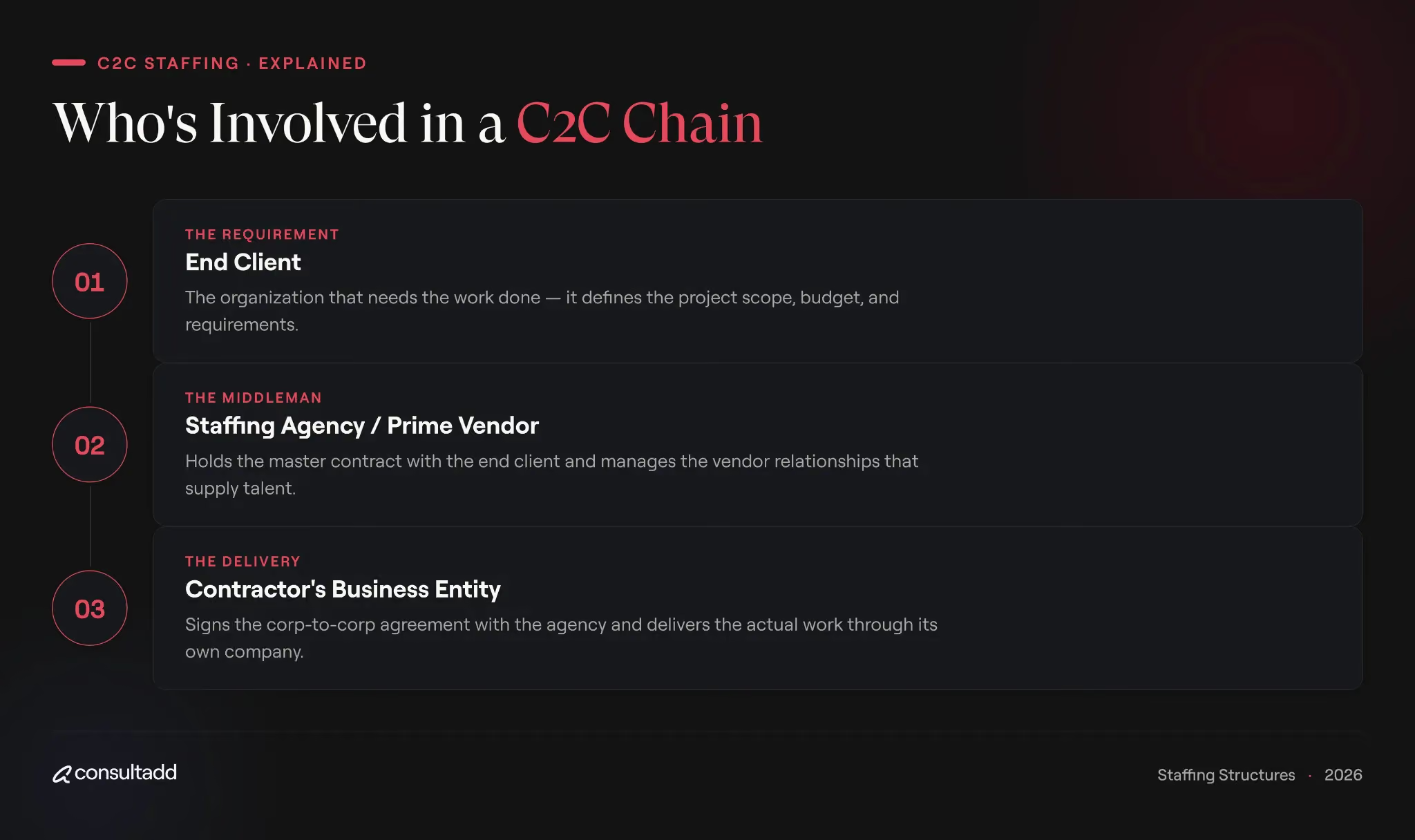
Money and paperwork flow down this chain, and so does risk. If one link in the chain isn't set up correctly, everyone above it can inherit the problem.
How a Corp to Corp Agreement Actually Works
Picture a nine-month software engineering project. The client doesn't want to hire full time for it. A staffing agency finds a contractor who already runs an LLC. The agency signs a C2C agreement with that LLC, not with the person behind it.
The contractor does the work. Their LLC invoices the agency. The agency bills the client. Everyone gets paid, but no one in the chain is technically the "employer" of the person writing the code, at least not in the traditional sense.
For a plain-language comparison of how this stacks up against other contract types, our guide on what contract work actually means covers 1099 and W2 setups side by side.
Corp to Corp vs W2 vs 1099
People mix these three up constantly, and honestly, the confusion isn't surprising. All three describe someone working on a project without a permanent job title, but the tax picture and the liability picture change with each one.
Why Companies and Contractors Choose Corp to Corp
For companies, C2C usually means no payroll taxes, no benefit obligations, and no long-term commitment. The relationship ends when the contract ends. There's no severance conversation to have.
For contractors, running a business entity brings more control over rates, the freedom to work with multiple clients at once, and tax deductions that W2 employees simply don't get.
None of that makes C2C the automatic right answer. It fits short, well-defined projects with niche skills far better than it fits an open-ended role where the company wants ownership over how the day-to-day work gets done.
Our piece on why C2C contract hiring solutions matter for recruitment goes into the scenarios where this model earns its keep.
Compliance Risks in Corp to Corp Staffing
This is where things go wrong for companies that treat C2C as a shortcut around hiring rules.
The IRS doesn't care what label sits on the contract. It looks at who controls the work, who carries the financial risk, and how the relationship actually functions from day to day.
The IRS's own guidance on employee versus independent contractor status lays out the same three factors examiners use in every classification review: behavioral control, financial control, and the type of relationship between the parties.
Get the classification wrong, and the Department of Labor's rules on misclassification can require back pay, overtime, and penalties, even when both sides agreed to the C2C label going in.
Corp to Corp and Visa Sponsorship
C2C gets more complicated once visa sponsorship enters the picture, especially for H-1B roles placed at a client's site instead of the sponsoring employer's own office.
USCIS pays close attention to these placements. Its guidance on third-party worksite requirements requires the petitioning employer to prove the work qualifies as a specialty occupation and that a genuine employer-employee relationship exists for the entire length of the petition.
That means real paperwork: signed contracts, detailed job duties, and a clear chain showing who actually directs the work. Skip this step and an H-1B extension can get denied or flagged for further review.
Our guide to corp to corp visa sponsorship for H1B jobs walks through the documentation USCIS typically asks for.
Is Corp to Corp Right for Your Hiring Needs?
C2C tends to make sense when:
- The project has a defined scope and a clear end date
- You need a specialized skill set you won't need on a permanent basis
- The contractor already runs a registered business with insurance in place
- Speed matters more than long-term retention
It tends to make less sense when:
- The role is genuinely full time and open-ended
- You want direct control over schedules, tools, and daily supervision
- The worker doesn't have, or want, their own business entity
If you land somewhere in the middle, that's usually a sign to bring in a staffing partner rather than guess your way through it.
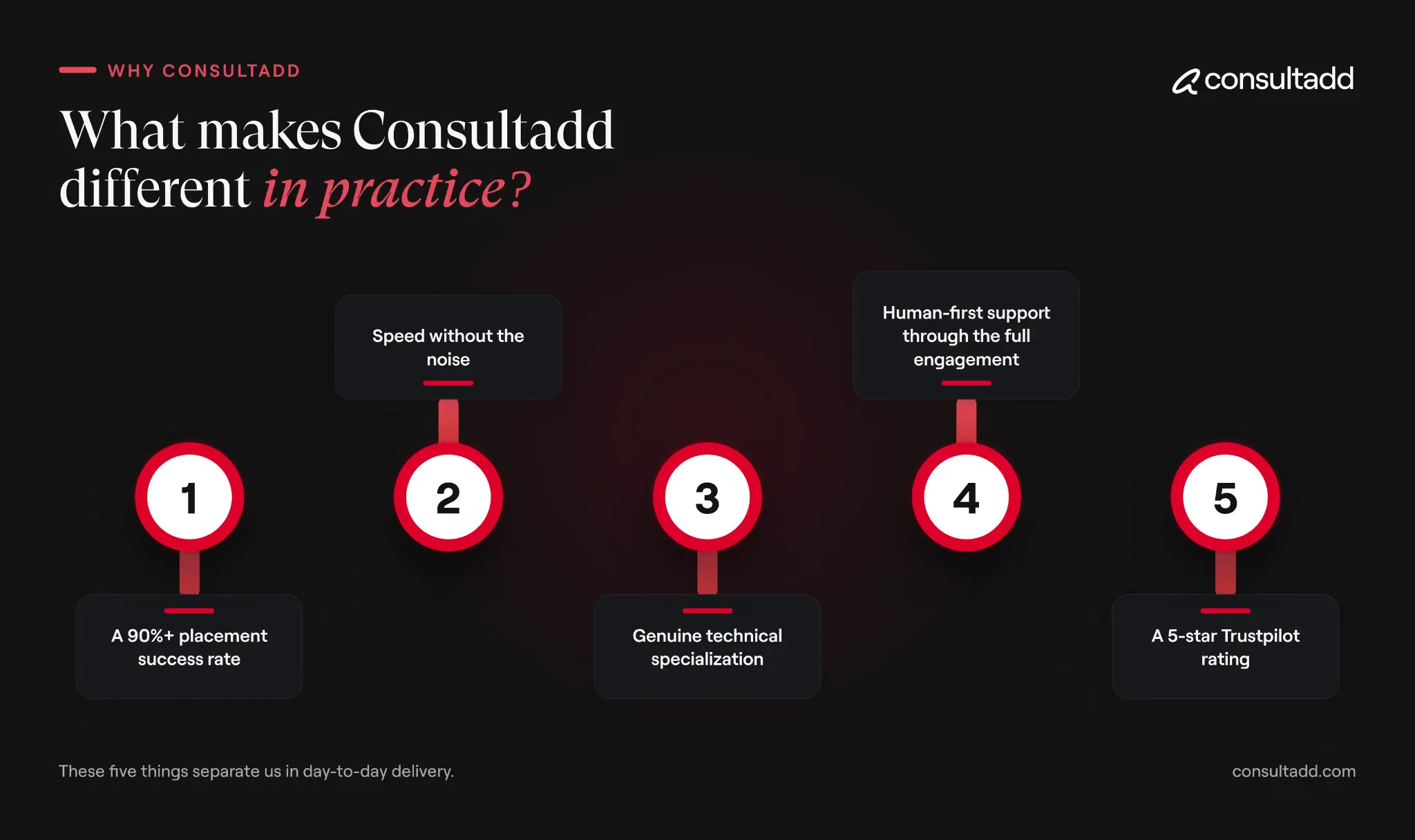
Start Strong With Consultadd
With 15 years in business and 5,000+ successful staffing engagements, we don't just fill roles, we build reliability into your process. We've supported 65 staffing companies in the past year alone and maintain MSAs with industry leaders like Robert Half and TEKsystems.
Here's what working with Consultadd looks like:
- Talent sourced in under 24 hours
- Ready-to-deploy candidates, vetted for experience and compliance
- Lower turnover risk: we match long-term goals, not just short-term needs
- Seamless compliance: visa, documentation, onboarding? Handled.
- Dedicated 1:1 account managers for responsive, personalized support
- Top 100 candidate matches delivered in the past year
- Strong partnerships with universities to tap into fresh, committed talent
- Post-placement support so your investment grows beyond day one
For candidates, your next opportunity is more than just a job title, it's a chance to build skills, gain experience, and move your career forward. At Consultadd, we connect technology professionals with projects and employers that align with their goals, whether they're looking for contract, contract-to-hire, or long-term opportunities.
The tech job market moves fast, but the right guidance can make all the difference. Ready to take the next step in your career journey? Explore Opportunities >>
Key Takeaways
- Corp to corp means the hiring company pays a contractor's business entity, not the contractor as an individual.
- A real LLC, S-corp, or C-corp is required on the contractor's side. A sole proprietorship won't qualify.
- C2C shifts tax and benefit responsibility to the contractor's business, unlike W2 arrangements.
- Misclassification is the biggest compliance risk, and both the IRS and Department of Labor enforce it.
- H-1B placements under C2C need solid documentation to satisfy USCIS third-party worksite rules.
FAQs
What does corp to corp (C2C) mean in staffing?
Corp to corp means the hiring company or staffing agency pays a contractor's registered business, like an LLC or S-corp, instead of paying the contractor directly. The contractor's business invoices for the work and handles its own taxes.
What's the difference between C2C and 1099?
A 1099 contractor works as an individual and reports income on their own tax return. A C2C contractor works through a registered business entity, and that entity, not the person, is the party named in the contract.
Can a corp to corp contractor be on an H1B visa?
It's possible, but it requires careful documentation. USCIS scrutinizes third-party placements closely and needs proof that a genuine employer-employee relationship exists for the full length of the petition.
Do I need an LLC to work corp to corp?
Yes. A C2C arrangement requires a real registered business entity, typically an LLC, S-corp, or C-corp. Working as a sole proprietor doesn't satisfy the structure.
Who pays taxes in a corp to corp arrangement?
The contractor's business entity handles its own tax obligations. The hiring company doesn't withhold payroll taxes the way it would for a W2 employee.
Is corp to corp the same as being self-employed?
Not quite. Both involve working outside traditional employment, but C2C specifically requires a registered business entity as the contracting party, while general self-employment (like 1099 work) doesn't.
.webp)

.png)

.webp)