

Introduction
The best CFO your company could hire is probably not reading job boards. She's busy running finance somewhere else, reasonably happy, and not applying to anything.
So how do executive search firms find candidates like her? Not through job postings. They find them through systematic market research, deep industry networks, and direct, confidential outreach to people who weren't looking.
That's the short answer, and it explains why executive search exists as a separate discipline from regular recruiting. Roughly 70 to 80% of executive-level candidates are passive.
The talent pool for a VP or C-suite role isn't a stack of applications; it's a map of who currently holds comparable roles across an industry, and someone has to build that map, then start conversations.
This guide walks through exactly how search firms do it: the sourcing methods, the step-by-step process, how long it takes, and what it costs.
TL;DR
- Executive search firms find candidates proactively through talent mapping, industry networks, referrals, and direct outreach, not through job ads or inbound applications.
- Most executive candidates (roughly 70 to 80%) are passive, meaning they're employed and not job hunting, so trust-based, confidential outreach is the core skill.
- The typical retained search runs six to seven stages, from intake brief to offer negotiation, and takes about 8 to 16 weeks end to end.
- Retained firms charge an upfront fee, usually 25 to 35% of the hire's first-year compensation, and most include a replacement guarantee.
- AI sourcing tools now compress the research phase dramatically, but the shortlist quality still comes from human judgment, relationships, and assessment rigor.
What executive search firms actually do
Executive search (you'll also hear "retained search" or, informally, "headhunting") is a specialized recruitment model for senior leadership roles: C-suite, VP, board, and other positions where a bad hire is expensive enough to justify a rigorous process. The urgency is real. CEO succession rates hit 12.5% in 2025, up from 9.8% the year before, according to Harvard Business Review reporting on Conference Board and Egon Zehnder data. Leadership seats are turning over faster, and boards want disciplined ways to fill them.
The structure of the engagement shapes how candidates get found, so it's worth separating the two dominant models:
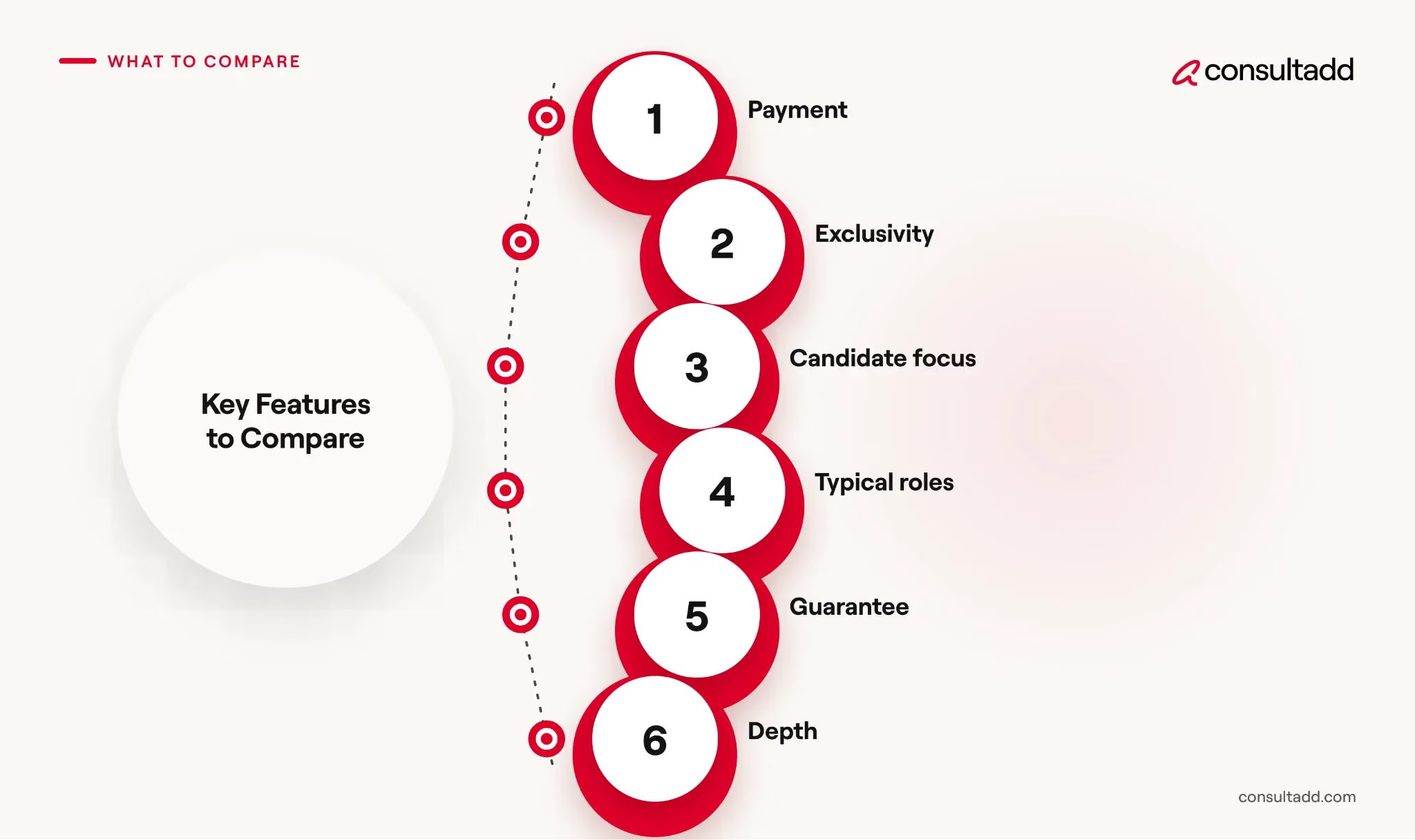
The retained model matters for one simple reason: because the firm is paid regardless of speed, it can afford to research the entire market rather than racing to submit whoever responds first. That research is where candidate discovery actually happens.
If you're weighing search firms against other options for senior roles, our breakdown of the best IT staffing firms in 2026 explains how to match the partner model to the problem you're solving.
How do executive search firms find candidates? The core methods
No single channel produces an executive shortlist. Firms layer four methods, and the blend is the craft.
Talent mapping and market research
This is the foundation, and it's the part outsiders rarely see. Researchers identify target companies (competitors, adjacent industries, companies one size up or down), then reverse-engineer their org charts to figure out who holds the comparable roles today. A single mandate might involve mapping and ranking 100+ leaders before anyone gets a call.
The output is a literal map of the talent market: names, titles, career trajectories, compensation estimates, and likely openness to a move. Done well, it surfaces strong candidates from non-obvious backgrounds, which referral-only sourcing systematically misses.
Industry networks and referrals
Search consultants spend years building relationships with executives, board members, and former placements across their specialty. When a mandate opens, those relationships become a referral engine: "who's the best supply chain leader you've worked with?" is a question that produces names no database contains, along with built-in credibility from the person making the introduction.
Firms also track rising leaders continuously, not just when a search is live. Consultants follow who's speaking at conferences, publishing in trade press, and getting promoted. By the time a role opens, a good consultant already knows a dozen plausible candidates personally.
Direct outreach to passive candidates
Once the map exists, the work becomes persuasion. Since most targets aren't looking, outreach can't read like a recruiter blast.
Consultants approach discreetly, often without naming the client at first, and position the conversation around career trajectory rather than a job description. Multi-channel sequences (calls, email, professional networks) run over weeks, and confidentiality cuts both ways: candidates need certainty their current employer won't hear about the conversation.
This is also where "off-limits" agreements shape the pool. Reputable retained firms won't poach from their own clients, which is a question worth asking before you hire one.
Databases, LinkedIn, and AI sourcing
The modern layer. Firms maintain proprietary candidate databases built over decades, and they use LinkedIn's advanced search alongside newer AI sourcing tools that scan professional profiles, publications, patents, and public code repositories.
The gain is coverage and speed: research that once took weeks can compress to days, and industry reporting in early 2026 credits AI-assisted research with pulling average C-suite search timelines down meaningfully.
The honest caveat: AI extends the map; it doesn't make the hire. The judgment about who can actually lead your company still comes from humans doing structured assessment. Firms that lean on automation without domain expertise produce fast, mediocre shortlists.
Here's how the channels compare:
The executive search process, step by step
Candidate discovery sits inside a larger structured process. Most retained searches follow a version of these stages, and the full cycle typically runs 8 to 16 weeks, stretching to 20+ for board and CEO roles:
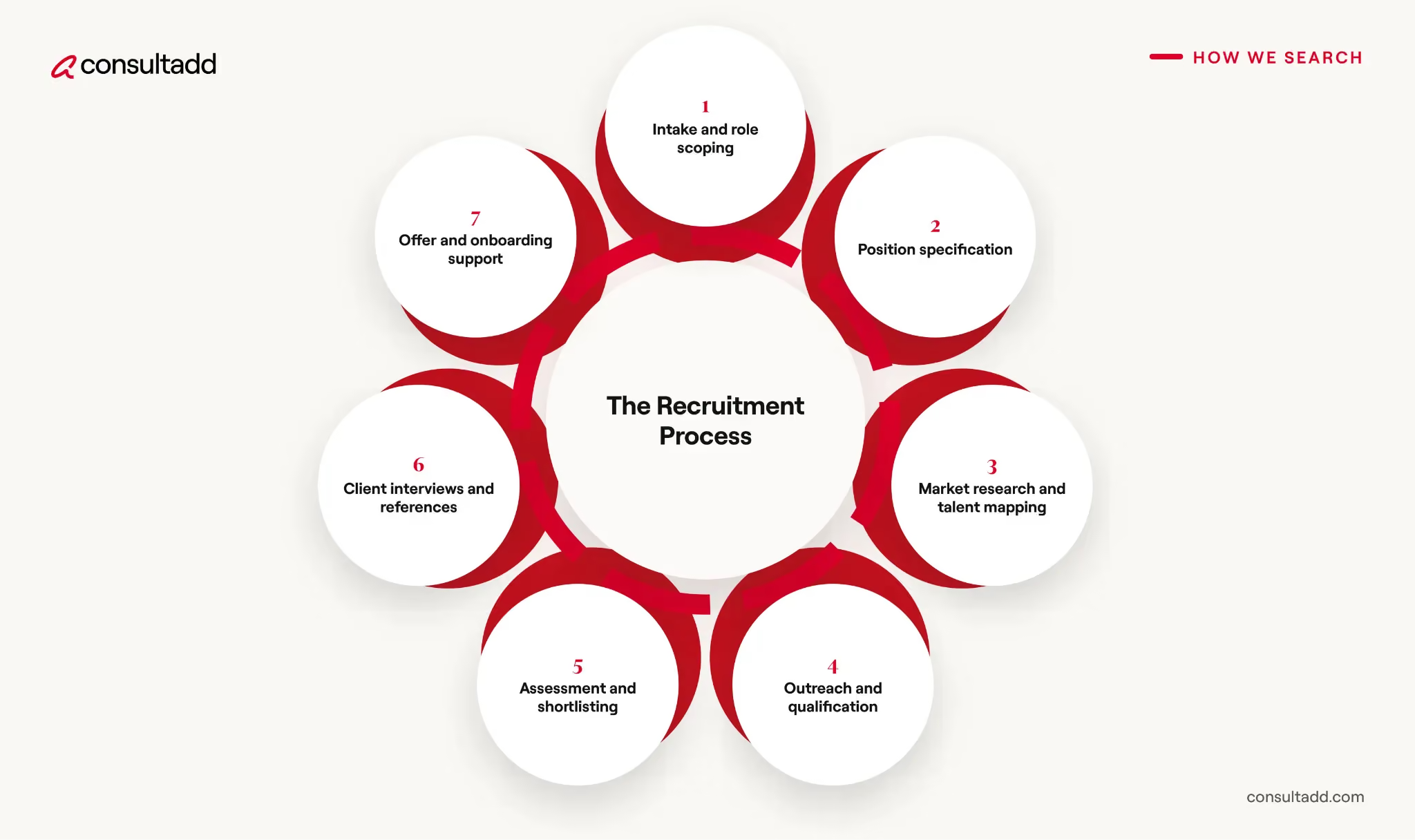
Two things about this table are worth underlining -
First, sourcing and assessment overlap; firms run outreach in parallel with early evaluation rather than sequentially, which is how a market of 100+ names becomes a shortlist of four without taking six months.
Second, the early stages determine the outcome. A vague position spec produces a vague shortlist, no matter how good the research is.
That's the same discipline gap we see in hiring generally, and it's a core theme in our review of the hiring strategies companies are actually using successfully.
How firms assess the candidates they find
Finding names is half the job. The other half is deciding which of them can actually do the work, and this is where search firms earn their fee or don't.
Structured evaluation has largely replaced gut feel at reputable firms. That means competency-based interviews scored against the position spec, and often formal leadership assessments layered on top; several large firms run candidates through proprietary frameworks or scoring models.
The reason is blunt: executive hires rarely fail on technical ability. They fail on misaligned expectations, cultural mismatch, and weak stakeholder management, so the assessment has to probe those directly.
Reference checking at this level is also a different animal from calling two listed references. Consultants work their networks to find people who worked with the candidate but weren't hand-picked by them, building a rounded picture of how the person leads under pressure.
For companies, this rigor is most of what you're paying for. For senior candidates on the other side of the table, it means preparation matters: expect evidence-based questions about outcomes you owned, not a friendly chat about your resume.
The preparation principles in our coding interview playbook scale up surprisingly well; structured processes reward structured answers at every level.
What this means for companies and candidates
So, how do executive search firms find candidates? By treating the talent market as something you research rather than something you advertise to: mapping who holds the relevant roles today, working networks built over decades, approaching passive leaders with discretion, and using technology to widen and speed up the search without outsourcing the judgment.
For companies, the practical takeaway is to engage a search firm when the role is senior enough, confidential enough, or specialized enough that the best candidates won't apply on their own.
Vet the firm on research methodology, who personally runs your search, off-limits policy, and guarantee terms rather than brand name alone.
For candidates, the lesson is that executive opportunities find you through visibility and relationships. Do excellent work, make it legible (speak, publish, lead things people can see), and treat every recruiter conversation as a long-term relationship rather than a transaction.
The consultant who calls you about the wrong role this year often calls about the right one in three.
And for the many leadership-adjacent and senior technical roles that don't need a retained search, faster models exist.
We covered when contract and contract-to-hire approaches beat traditional recruiting in IT contract staffing is a business strategy, not a backup plan.
Start Strong With Consultadd
With 15 years in business and 5,000+ successful staffing engagements, we don't just fill roles, we build reliability into your process. We've supported 65 staffing companies in the past year alone and maintain MSAs with industry leaders like Robert Half and TEKsystems.
Here's what working with Consultadd looks like:
- Talent sourced in under 24 hours
- Ready-to-deploy candidates, vetted for experience and compliance
- Lower turnover risk: we match long-term goals, not just short-term needs
- Seamless compliance: visa, documentation, onboarding? Handled.
- Dedicated 1:1 account managers for responsive, personalized support
- Top 100 candidate matches delivered in the past year
- Strong partnerships with universities to tap into fresh, committed talent
- Post-placement support so your investment grows beyond day one
For candidates, your next opportunity is more than just a job title, it's a chance to build skills, gain experience, and move your career forward. At Consultadd, we connect technology professionals with projects and employers that align with their goals, whether they're looking for contract, contract-to-hire, or long-term opportunities.
The tech job market moves fast, but the right guidance can make all the difference. Ready to take the next step in your career journey? Explore Opportunities >>
Key takeaways
- Executive search firms find candidates through original market research and talent mapping, industry networks and referrals, confidential outreach to passive leaders, and database/AI-assisted sourcing, layered together rather than used alone.
- Because 70 to 80% of executive candidates aren't job hunting, discretion and relationship-building matter more than any job posting ever could.
- A retained search follows six to seven structured stages and typically takes 8 to 16 weeks, with fees of 25 to 35% of first-year compensation and usually a replacement guarantee.
- AI tools now compress the research phase from weeks to days, but shortlist quality still depends on human assessment, structured interviews, and off-list reference checks.
- Companies should vet firms on methodology, off-limits policy, and who personally leads the search; candidates should invest in visibility and long-term recruiter relationships.
FAQs
How do executive search firms find candidates?
They research the market rather than advertise to it. Firms map target companies and their org charts to identify who holds comparable roles, tap industry networks and referrals for trusted names, and approach passive candidates directly and confidentially. Proprietary databases and AI sourcing tools extend the reach, but the shortlist comes from human judgment.
What is the difference between an executive search firm and a recruitment agency?
Executive search firms work on a retained, exclusive basis for senior leadership roles, conducting original research to reach passive candidates, and are paid upfront. Recruitment agencies typically work on contingency, competing to place mostly active job seekers in mid-level roles, and are paid only on a successful hire.
How much do executive search firms charge?
Retained firms typically charge 25 to 35% of the hire's first-year total compensation, billed in installments starting at engagement. Most include a replacement guarantee, commonly 12 months, meaning they'll redo the search if the placement leaves early. Contingency recruiters charge a success fee only, usually at lower percentages.
How long does an executive search take?
Most retained searches run 8 to 16 weeks from intake brief to accepted offer. Board and CEO searches can extend to 20 weeks or more. Firms using AI-assisted research have shortened the mapping phase considerably, but client interview scheduling and offer negotiation still set the pace at the end.
Do executive search firms work with candidates directly?
Yes, but the client company hires and pays them, so they place people into the searches they're running rather than shopping candidates around. Senior professionals should still build relationships with search consultants in their industry, keep their accomplishments visible, and respond thoughtfully to outreach, since that's how you end up on the map for future mandates.
What is talent mapping in executive search?
Talent mapping is the research process of identifying every relevant leader in a target market: which companies employ them, what roles they hold, their career trajectories, and their likely openness to a move. Firms often map and rank more than 100 executives per search before outreach begins, which is how strong but non-obvious candidates get found.
.webp)


.webp)