

Introduction
AWS still runs roughly 30% of the world's cloud infrastructure, more than Azure and Google Cloud combined at some measurements, which means the demand to hire AWS developers hasn't cooled even as the broader tech hiring market has.
What's changed is the bar. In 2026, "knows EC2 and S3" doesn't clear it anymore. Companies now need engineers who can architect for cost and scale, secure what they build, and increasingly, work fluently with AWS's AI services like Bedrock and SageMaker.
That raised bar is exactly why hiring AWS developers has gotten harder to do well, even though the talent pool is objectively large. Titles are inconsistent, certifications get treated as proof of competence when they're really proof of studying, and the best candidates rarely stay on the market long enough for a slow process to catch them.
This guide covers what to actually look for, what the role costs in 2026, how to structure the hiring process, and which engagement model fits your situation.
TL;DR
- Look past the title. Evaluate compute, storage, networking, IaC (Terraform or CloudFormation), and security fundamentals, not just years of "AWS experience."
- AWS certifications correlate with roughly a 26% salary premium and reliably indicate structured knowledge, but they're a signal to verify, not a substitute for a technical assessment.
- US salaries for AWS developers commonly run $110,000 to $195,000+ depending on seniority and location; contract and freelance rates in North America typically fall between $90 and $180+ per hour.
- AI-service fluency (Bedrock, SageMaker, Amazon Q) is now a real differentiator, not a nice-to-have, especially for roles touching product development.
- Match the engagement model to the need: full-time for core infrastructure ownership, contract or contract-to-hire for defined projects, migrations, and fluctuating capacity.
What an AWS developer actually does
"AWS developer" covers a wider range of work than the title suggests, and the range is exactly why hiring for it goes wrong when the job description is vague. In practice, the role usually blends three things: building application code that runs on AWS services, provisioning and managing the infrastructure that supports it, and making ongoing decisions about cost, scale, and security as the system grows.
That's different from a pure cloud engineer or DevOps hire, who typically owns infrastructure and pipelines without writing much application code, and different from a solutions architect, who designs systems at a higher level without necessarily implementing them day to day.
Job posts often blur these, which is the single biggest reason companies interview five "AWS developers" and get five wildly different skill profiles. Decide which of the three you actually need before writing the req.
The skills that separate strong candidates from average ones
Years of "AWS experience" on a resume tells you almost nothing; plenty of engineers have spent three years clicking around the console without developing real judgment. Here's what actually predicts performance:
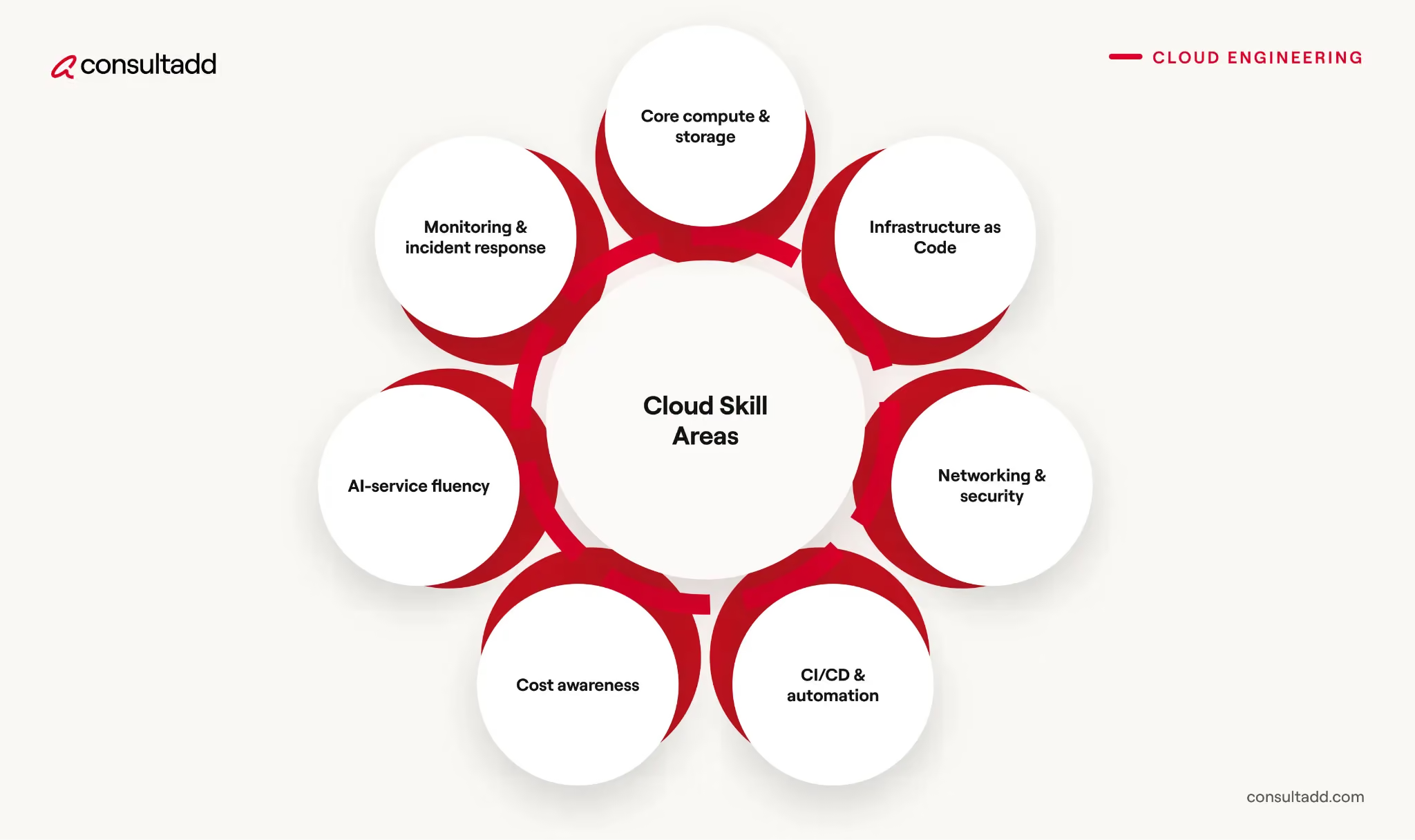
The single best interview signal across all of these: ask a candidate to walk through a system they actually built, end to end, including a decision they'd make differently now. Depth and honesty here separate real builders from resume padding faster than any trivia question.
For teams building out a broader technical interview loop around this role, our guide to interview questions for a full stack developer covers the adjacent frontend/backend rigor that pairs well with AWS-specific technical rounds.
Do certifications matter?
Yes, with a caveat. AWS certifications correlate with a real salary premium, industry salary reports put the average uplift around 26%, and the Solutions Architect Associate remains the most commonly required credential, appearing in a large majority of cloud job postings.
Certifications also give recruiters a fast, standardized signal: a certified candidate has demonstrably studied AWS's own best practices rather than picked up habits from whatever their last employer happened to do.
The caveat is real too. A certification proves someone can pass a structured exam, not that they can debug a production incident under pressure or make a sound cost trade-off on a live system. Treat certifications the way you'd treat a degree: a credible signal worth weighting, never a substitute for a hands-on technical assessment.
The strongest candidates typically pair a relevant certification (Developer Associate for coding-heavy roles, Solutions Architect for design-heavy ones, Security or Machine Learning specialties for those niches) with a portfolio or work history that shows the certification in action.
What it costs to hire AWS developers in 2026
Budget conversations go smoother with real numbers on the table. Here's the 2026 landscape across engagement models:
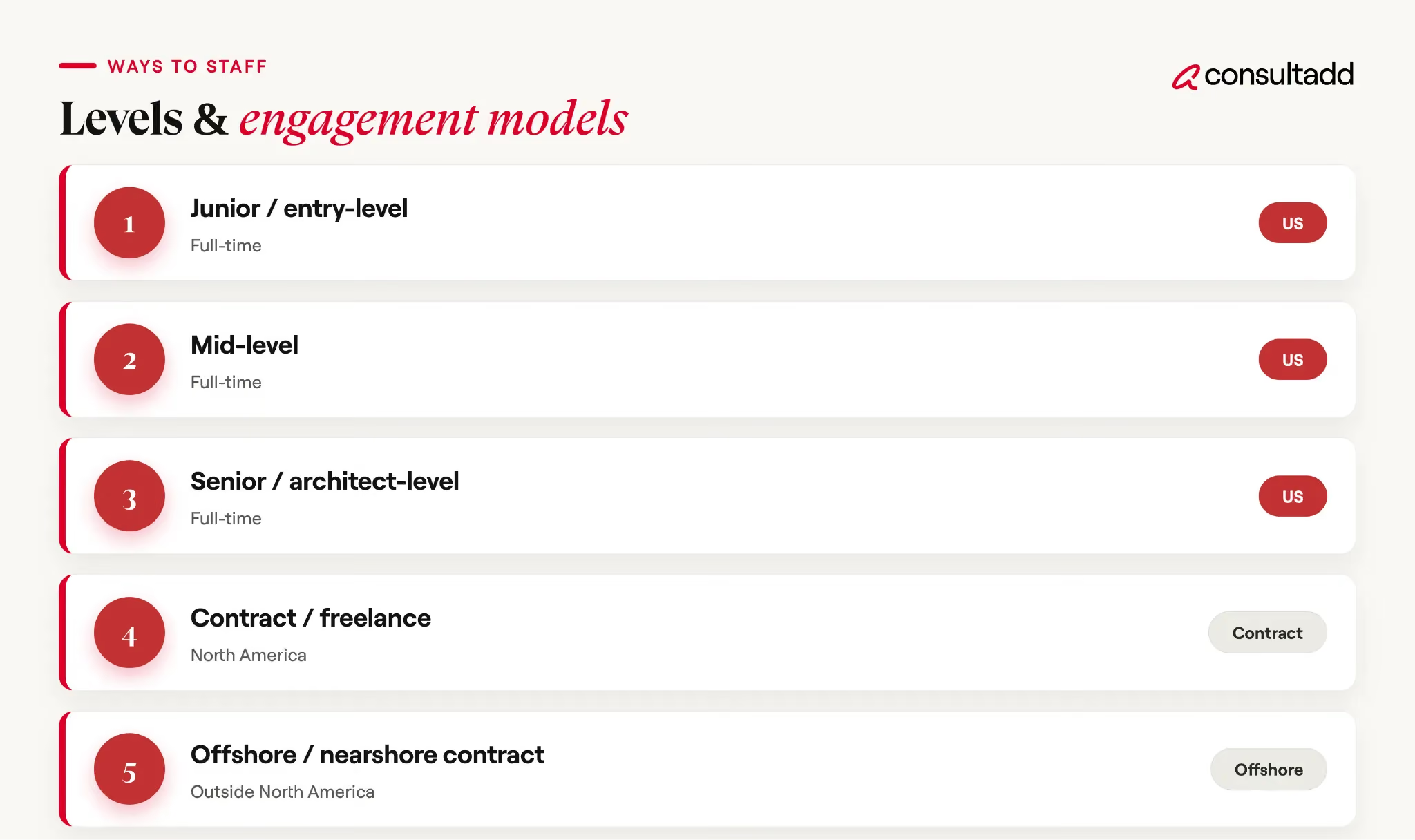
Two budgeting notes worth internalizing.
- First, the sticker salary isn't the full cost: recruiting fees, onboarding time, and tooling commonly add another 20-30% on top, and companies that budget only the base salary consistently get surprised.
- Second, speed has a price tag of its own. Top AWS talent doesn't sit on the market long, and a slow offer process is one of the most common, most avoidable reasons companies lose candidates they'd already won over.
Our breakdown of time to hire vs time to fill covers how to diagnose exactly where that speed leaks out of your process.
Full-time, contract, or contract-to-hire?
The right engagement model depends on the shape of the need, not just the budget:
How to vet candidates: questions and process
A structured loop beats an improvised one, both for accuracy and for speed. A solid AWS developer process runs three stages:
1. Technical screen (30-45 minutes):
Verify fundamentals conversationally before investing in a longer assessment:
- "Walk me through the architecture of a system you built on AWS, end to end."
- "How would you design for a service that needs to handle a 10x traffic spike?"
- "Explain the difference between an IAM role and an IAM user, and when you'd use each."
- "Tell me about a time your AWS bill surprised you. What did you do?"
2. Hands-on assessment (60-90 minutes):
A live or take-home exercise scoped to the actual role: provisioning infrastructure with Terraform or CloudFormation, debugging a broken deployment, or designing a solution to a realistic scenario (a service outgrowing its current architecture, a security misconfiguration to find and fix). Watch for how they reason, not just whether they land the exact right answer.
3. Architecture and judgment discussion (45-60 minutes):
For anything above junior level, this is where separation actually happens. Present a system with real constraints (cost ceiling, compliance requirement, legacy dependency) and have the candidate reason through trade-offs out loud.
The candidates worth hiring will ask clarifying questions before proposing a design, the same discipline that matters in any serious system design interview.
Find our guide to hiring and recruiting strategies useful for the surrounding process, sourcing, structure, and speed together.
The bottom line: hiring AWS developers well in 2026 comes down to clarity on what you actually need, a real technical bar instead of a certification checklist, honest budgeting for the full cost of a hire, and a process fast enough to close candidates before someone else does.
Start Strong With Consultadd
With 15 years in business and 5,000+ successful staffing engagements, we don't just fill roles, we build reliability into your process. We've supported 65 staffing companies in the past year alone and maintain MSAs with industry leaders like Robert Half and TEKsystems.
Here's what working with Consultadd looks like:
- Talent sourced in under 24 hours
- Ready-to-deploy candidates, vetted for experience and compliance
- Lower turnover risk: we match long-term goals, not just short-term needs
- Seamless compliance: visa, documentation, onboarding? Handled.
- Dedicated 1:1 account managers for responsive, personalized support
- Top 100 candidate matches delivered in the past year
- Strong partnerships with universities to tap into fresh, committed talent
- Post-placement support so your investment grows beyond day one
For candidates, your next opportunity is more than just a job title, it's a chance to build skills, gain experience, and move your career forward. At Consultadd, we connect technology professionals with projects and employers that align with their goals, whether they're looking for contract, contract-to-hire, or long-term opportunities.
The tech job market moves fast, but the right guidance can make all the difference. Ready to take the next step in your career journey? Explore Opportunities >>
Key Takeaways
- Define which role you actually need, developer, cloud engineer, or architect, before writing the job post; the titles get used interchangeably but the skill profiles differ.
- Evaluate compute, IaC, networking/security, cost awareness, and increasingly AI-service fluency, not just years of AWS exposure.
- Certifications carry a real ~26% salary premium and are a credible signal, but pair them with a hands-on technical assessment rather than treating them as sufficient proof.
- US salaries commonly run $110K-$195K+ by seniority, with contract rates in North America typically $90-$180+ per hour; budget an extra 20-30% for recruiting, onboarding, and tooling costs.
- Match the engagement model to the need: full-time for core ownership, contract or contract-to-hire for migrations and defined projects, and a vetted staffing partner when speed matters most.
FAQs
What skills should I look for when I hire AWS developers?
Prioritize core compute and storage fluency (EC2, Lambda, S3, RDS/DynamoDB), Infrastructure as Code experience with Terraform or CloudFormation, networking and IAM security judgment, CI/CD experience, and demonstrated cost awareness. In 2026, working familiarity with AWS's AI services like Bedrock and SageMaker is an increasingly important differentiator for roles touching product development.
How much does it cost to hire an AWS developer in 2026?
Full-time US salaries typically run $85,000-$110,000 for junior roles, $110,000-$165,000 for mid-level, and $165,000-$200,000+ for senior and architect-level positions. Contract and freelance rates in North America generally fall between $90 and $180+ per hour depending on seniority and specialty. Budget an additional 20-30% beyond salary for recruiting, onboarding, and tooling.
Are AWS certifications worth requiring for candidates?
They're a credible, worth-weighting signal: certified professionals earn roughly a 26% premium on average, and certifications like Solutions Architect Associate appear in most cloud job postings. But a certification proves exam knowledge, not production judgment, so pair it with a hands-on technical assessment rather than treating it as sufficient on its own.
Should I hire a full-time AWS developer or use a contractor?
Choose full-time for core infrastructure ownership and long-term architectural responsibility. Choose contract or contract-to-hire for defined projects like cloud migrations, modernization efforts, or temporary capacity spikes where a permanent headcount line isn't justified once the work completes. A vetted staffing partner can support either model with faster, pre-screened access to talent.
What interview questions best reveal a strong AWS developer?
The single highest-signal question: have the candidate walk through a real system they built end to end, including a decision they'd revisit today. Follow with a scaling scenario ("design for a 10x traffic spike"), an IAM/security question, and a story about an unexpected AWS bill. For senior roles, an open-ended architecture discussion with real constraints reveals judgment better than any trivia round.
What's the difference between an AWS developer, cloud engineer, and solutions architect?
An AWS developer typically builds application code that runs on AWS services and manages the supporting infrastructure. A cloud engineer or DevOps hire usually owns infrastructure and deployment pipelines with less application-code responsibility. A solutions architect designs systems at a higher level, often across teams, without necessarily implementing them directly. Job posts frequently blur these, so clarify which one you need before hiring.
.webp)


.webp)