.avif)

Introduction
For twenty-five years, the standard answer to what predicts job performance was cognitive ability, with structured interviews tied alongside it. Then a reanalysis pulled the numbers apart.
It was found that decades of meta-analyses had over-corrected for range restriction, inflating most validity estimates.
When the math was redone, structured interviews came out as the single top-ranked selection procedure, ahead of cognitive ability tests. Most estimates dropped by .10 to .20 points, but structured interviews dropped least.
So the answer to how to interview candidates well is less about charisma or gut reading and more about doing the same thing to every candidate and writing down what you saw.
That sounds bureaucratic. It is also the highest-leverage change most hiring teams can make.
TL;DR
- Structured interviews now rank as the strongest single predictor of job performance in the revised research, at roughly .42 operational validity.
- Unstructured interviews sit near the bottom of the list, alongside years of experience and educational credentials.
- Structure means four things: the same questions, in the same order, scored against a written anchored scale, by interviewers who rate independently.
- Write two questions per competency, cap the scorecard at five to eight competencies, and mix behavioral with situational.
- Score before the debrief. Once someone says "I loved them" out loud, the room's independent judgment is gone.
Why structure beats instinct
The revised numbers are worth seeing side by side, because a lot of hiring advice still quotes the 1998 figures.
Two things to take from this:
First, the ordering shifted: job-specific predictors like structured interviews, job knowledge tests, and work samples now sit above general psychological measures. The Society for Industrial and Organizational Psychology has a readable summary of why this reordering happened.
Second, the gap between structured and unstructured is the actionable part. McDaniel's earlier meta-analysis put structured interviews at .44 against .33 for unstructured. Same room, same hour, same interviewer, materially different signal, purely because of how the conversation was organized.
The authors themselves cautioned against reading their results as a mandate to prefer one tool over another in all circumstances.
Cost, volume, candidate reactions, and subgroup differences all factor in. But if you're already interviewing, adding structure costs nothing except preparation time.
How to interview candidates well: the process
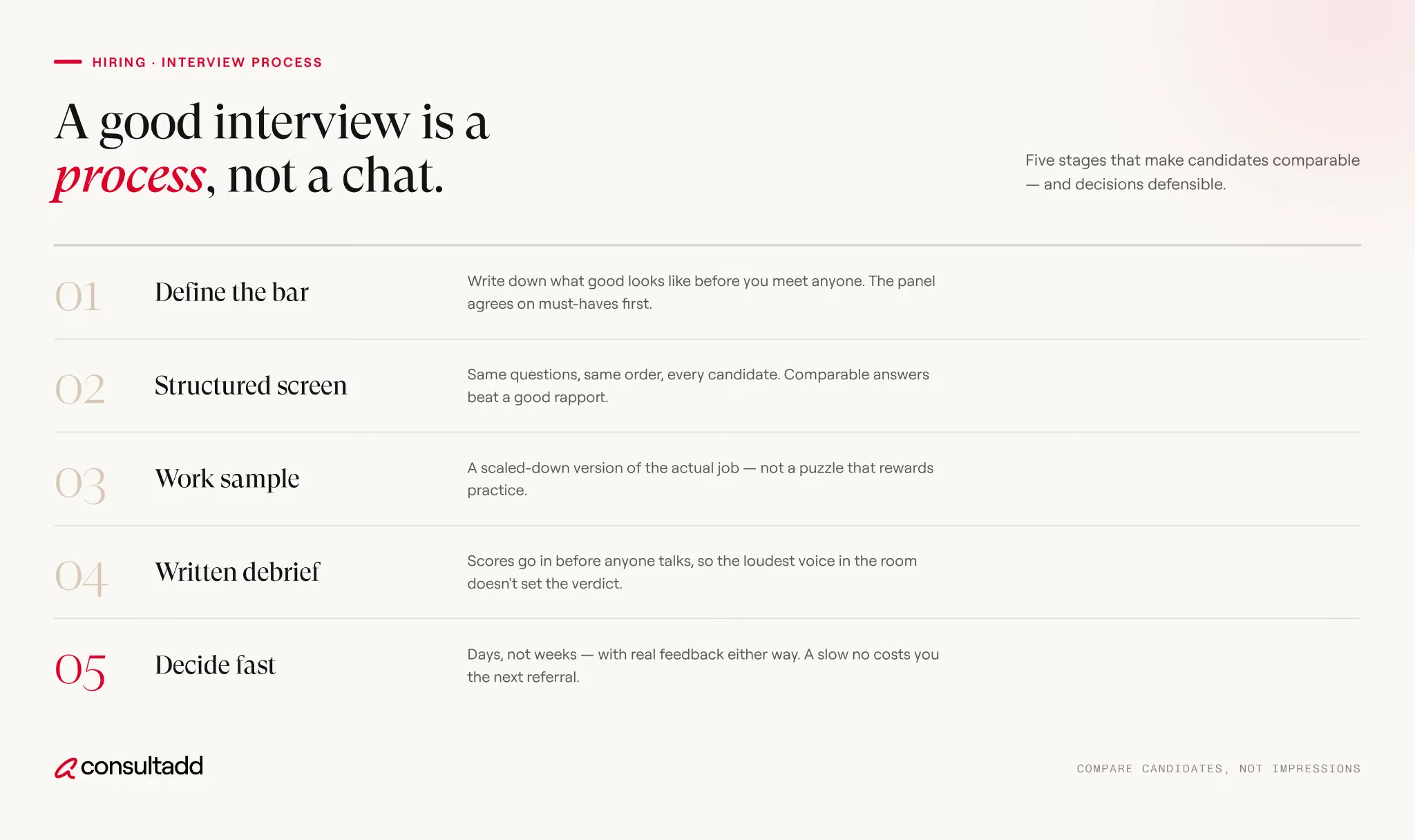
Seven steps. The first three happen before anyone talks to a candidate, and that's where most of the value is.
1. Define the competencies
Three to five for most roles, five to eight at the outside. Not "communication" in the abstract, but what communication means in this job: explains technical tradeoffs to non-engineers, writes design docs a new joiner can follow, escalates blockers early.
If you can't describe what good looks like, you can't score it.
2. Write the questions
Roughly two per competency, which puts a six-competency role at about twelve questions. That's a practitioner rule of thumb rather than a research finding, but it maps to what fits in a real interview loop.
Build them from actual incidents in the job. What went wrong on this team last quarter? What did the person who succeeded in this role do differently? Those become your questions.
Skip brain teasers. Google abandoned them years ago after finding they predicted nothing.
3. Build the anchored rating scale
This is the step teams skip, and skipping it is what turns a structured interview back into a chat with a form attached.
The US Office of Personnel Management's structured interview guide recommends at least three proficiency levels, ideally five to seven, with labels on at least three of them.
Something like this:
Write these once per competency and reuse them. Then run a short calibration session with the panel using sample answers, so everyone agrees what a 3 looks like before the first candidate arrives.
4. Brief the panel
Assign competencies so two interviewers aren't both probing the same thing. Tell each person what they own. Send them the questions and the scale in advance.
5. Run the interview
Same questions, same order, for every candidate. Probing is allowed and necessary. Improvising new questions because you're curious is not, because it destroys comparability.
Aim for roughly 80% candidate talking time. If you're explaining the role for twenty minutes, you're collecting no evidence. Take notes on what they said, not on your impression of it.
"Rewrote the deploy script, cut release time from 3 hours to 20 minutes" is evidence. "Seems sharp" is not.
6. Score independently, before the debrief
Every interviewer submits ratings with written evidence before anyone compares notes. This single rule does more for decision quality than any question you could add.
7. Decide from the scores
Compare the ratings, then discuss where they diverge. Divergence is useful information; it usually means one interviewer saw something the other didn't ask about.
The conversation should sound like "she scored 2 on ambiguity and here's why" rather than "I just wasn't feeling it."
Question design that produces evidence
Two families do the work. Use both:
For behavioral answers, listen for all four parts of the STAR structure: situation, task, action, result.
Candidates who describe a team accomplishment without ever saying what they personally did are the most common miss. Probe with "what was your specific piece of that?" and see what comes back.
For situational questions, use scenarios from your actual backlog. "A customer reports your fix broke something else and your lead is on holiday. What are your first ten minutes?" tells you more than any hypothetical about a burning building.
Mistakes that quietly wreck good processes
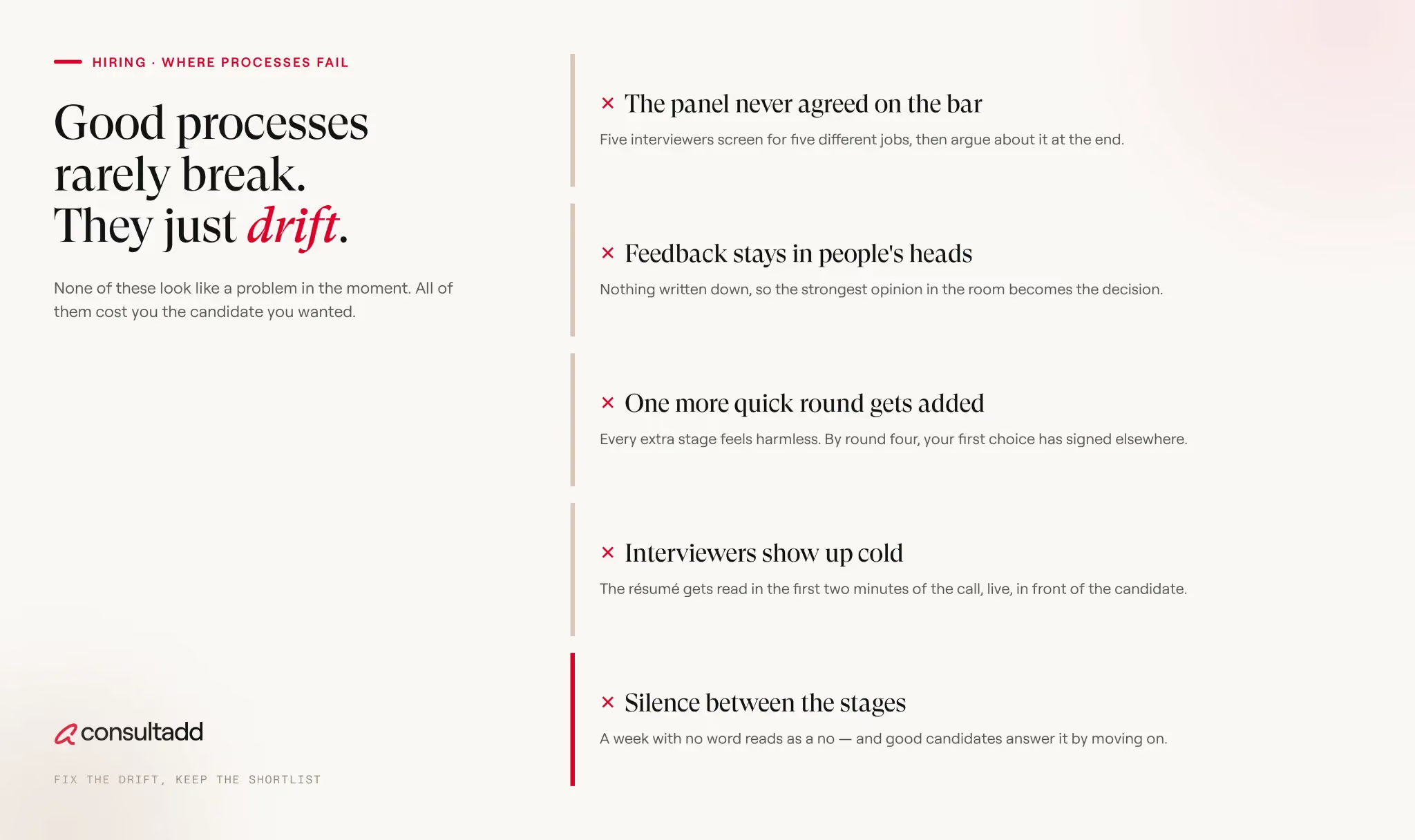
- Deciding in the first four minutes and spending the rest confirming it. Structure is the antidote, which is another reason to score against the scale rather than against your first impression.
- Talking too much. Selling the role is a separate conversation from assessing the candidate. Do it at the end.
- Hiring for likability and calling it culture fit. Decompose values into observable behaviors and score those. Otherwise you're screening for similarity to yourself.
- Letting the loudest voice anchor the debrief. Independent scoring first, every time.
- Overweighting years of experience and credentials. Both sit near the bottom of the validity list. They're filters, not predictors.
- Reusing a scorecard across different roles. Competencies are job-specific. That's precisely why structured interviews outperform general measures.
- No probing. A structured interview isn't a script read aloud. Follow-up questions are where thin answers come apart.
Candidate experience is part of doing this well
A well-run interview is also a better experience, which matters because your best candidates have other options.
What actually helps: tell them the format and who they'll meet in advance, give them the competencies you're assessing, keep to time, and commit to a decision date and hit it.
Sharing your questions beforehand doesn't hurt validity much and it reduces the advantage held by candidates who've simply interviewed more recently.
What doesn't help: unpaid multi-day take-homes, panels the candidate wasn't told about, and silence after a final round.
For contract and contract-to-hire roles the calculus shifts, because the engagement itself functions as the evaluation.
The contract-to-hire model trades a longer interview loop for a shorter one plus a real working trial, which is one reason it's become the default for a lot of senior technical hiring.
Legal and AI considerations
Two things to keep straight.
Consistency is a legal asset, not just a quality one.
- Asking every candidate the same job-related questions and documenting scores against a written rubric is exactly the record you'd want if a hiring decision were ever challenged.
- Ad hoc questions are where problems start, both for accuracy and for exposure.
AI interview tools carry their own obligations.
- New York City's Local Law 144 requires an independent bias audit within the prior twelve months, a public summary of the results, and advance notice to candidates before an automated employment decision tool is used for a role performed in NYC.
- Illinois has required consent and disclosure for AI-analyzed video interviews since 2020 and broadened its AI employment rules from January 2026.
- Several other states are moving, and the specifics have shifted more than once, including in Colorado.
- Title VII and the ADA apply to algorithmic tools regardless of what any state statute does.
Practical version: don't deploy a tool you can't demonstrate is fair, and check the current rules with counsel for every jurisdiction where candidates sit. None of this is legal advice.
Where to start tomorrow
If you take one thing from all of this: knowing how to interview candidates well is mostly knowing how to prepare before the interview and how to record what happened after it.
The hour in the room is the least variable part:
- Pick your next open role.
- Write down four competencies, eight questions, and a five-point scale for each competency. Send them to the panel.
- Require scores before the debrief.
- That's an afternoon of work, and it moves your process from the bottom of the validity list to the top of it.
If your hiring volume is the constraint rather than your process, the IT staffing trends breakdown covers where competition for technical talent is concentrating.
Start Strong With Consultadd
With 15 years in business and 5,000+ successful staffing engagements, we don't just fill roles, we build reliability into your process. We've supported 65 staffing companies in the past year alone and maintain MSAs with industry leaders like Robert Half and TEKsystems.
Here's what working with Consultadd looks like:
- Talent sourced in under 24 hours
- Ready-to-deploy candidates, vetted for experience and compliance
- Lower turnover risk: we match long-term goals, not just short-term needs
- Seamless compliance: visa, documentation, onboarding? Handled.
- Dedicated 1:1 account managers for responsive, personalized support
- Top 100 candidate matches delivered in the past year
- Strong partnerships with universities to tap into fresh, committed talent
- Post-placement support so your investment grows beyond day one
For candidates, your next opportunity is more than just a job title, it's a chance to build skills, gain experience, and move your career forward. At Consultadd, we connect technology professionals with projects and employers that align with their goals, whether they're looking for contract, contract-to-hire, or long-term opportunities.
The tech job market moves fast, but the right guidance can make all the difference. Ready to take the next step in your career journey? Explore Opportunities >>
Key takeaways
- Structured interviews rank as the top single predictor of job performance in the revised 2022 estimates, at about .42, with cognitive ability tests revised down to .31.
- Unstructured interviews, years of experience, and educational credentials all sit near the bottom of the validity hierarchy.
- Structure requires four elements: identical questions, a written anchored rating scale, independent scoring, and a panel.
- Three to five competencies, about two questions each, mixing behavioral and situational, is a workable default.
- Independent scores submitted before the debrief is the highest-return single rule in the whole process.
FAQs
What makes an interview "structured"?
Four things together: every candidate gets the same job-related questions in the same order, answers are rated against a written anchored scale, interviewers score independently before discussing, and the ratings are combined systematically rather than by consensus. Dropping any one of them reduces the benefit.
How many questions should an interview have?
A common rule of thumb is two per competency, so a role with five or six competencies lands around ten to twelve questions. Fewer competencies scored properly beats more competencies scored loosely, so cap the scorecard at five to eight.
Are behavioral or situational questions better?
Neither dominates. Behavioral questions work better for experienced candidates because there's a track record to probe. Situational questions work better for early-career candidates and for scenarios nobody has faced yet. Most good interviews use both for each competency.
Should I share interview questions with candidates in advance?
It's defensible and often improves the process. It reduces the edge held by candidates who simply interview more often, and it gets you considered answers rather than performances under time pressure. What it won't do is compensate for a missing rating scale.
How do I stop interviewers from just going with their gut?
Give them a scale with written anchors and require evidence alongside every score. Then collect the scores before the debrief starts. Gut feel is hardest to dislodge once it's been said out loud in a room.
Do I need to worry about legal issues in interviews?
Consistency is your best protection. Asking every candidate the same job-related questions and keeping scored records is exactly what you'd want on file if a decision were challenged. If you use AI screening or AI-analyzed video interviews, additional bias audit, notice, and consent rules may apply depending on where candidates are located. Check with employment counsel.
.webp)


.webp)