


Introduction
You have probably seen it on a job listing or in a recruiter's email: a 1099 role, a 1099 gig, a 1099 opportunity. It sounds official, maybe a little intimidating. So what is a 1099 business opportunity, really?
Here is the short version. It is not a product you buy off a shelf or a franchise you sign up for. It is a chance to earn money as an independent contractor instead of a regular employee. You offer your skills or services to a client, they pay you, and at tax time you get a Form 1099-NEC rather than a W-2. That one difference changes how you get paid, how you file taxes, and how much freedom you have over your work.
For a lot of people, that trade is worth it. For others, it is a headache they did not sign up for. Let me walk through how it works so you can decide which camp you fall into.
TL;DR
- A 1099 business opportunity is a chance to earn income as a self-employed independent contractor, not a job you buy or a franchise.
- You get paid without tax withholding, so you handle your own taxes and set aside 25% to 30% of income.
- The 2026 self-employment tax rate is 15.3%, and on $100,000 a 1099 worker pays roughly $7,065 more in employment taxes than a W-2 employee.
- The upside is control, flexibility, higher earning potential, and broad tax deductions.
- Watch for red flags like upfront fees or "recruit others to earn" pitches, which are not real 1099 opportunities.
What is a 1099 business opportunity?
A business opportunity, in plain terms, is a favorable situation you can use to start or grow something of your own. Add "1099" to it and you are talking about doing that as an independent contractor.
The name comes from the IRS form. When a client pays you as a contractor, they report it on a 1099-NEC (short for nonemployee compensation). When an employer pays you as staff, they use a W-2.
The IRS treats anyone who receives a 1099-NEC as self-employed, which is a tax status, not a business structure.
So a 1099 business opportunity usually means one thing: there is a demand for a skill you have, and you can meet it as your own boss.
Maybe a company needs a software developer for a six-month project. Maybe a growing business needs marketing help but does not want a full-time hire. You step in, do the work, and run it like a one-person business.
The best of these opportunities share a few traits. They solve a clear need, they pay well enough to be worth your time, and they can grow as you add clients.
How a 1099 opportunity actually works
The mechanics are simpler than the paperwork makes them look. You agree on a scope and a rate, you do the work, and you invoice for it. No taxes come out of your pay.
That money is yours to manage, which is both the appeal and the catch.
The 1099-NEC form and reporting thresholds
- If a single client pays you enough in a year, they send you a 1099-NEC and file a copy with the IRS.
- For 2026, that reporting threshold rose to $2,000, up from the long-standing $600 figure, under a recent tax law change.
- One thing trips people up here. You owe tax on all your self-employment income whether or not a form shows up in your mailbox.
- The 1099 is a reporting tool, not the thing that creates the tax. Keep your own records and report everything.
1099 versus W-2: who handles what
This is the comparison that matters most. A W-2 employer withholds your income tax, takes out your share of Social Security and Medicare, and pays the employer half on top.
As a 1099 contractor, none of that happens for you. You carry it all.
Neither column is "better" in the abstract. It depends on what you value. If predictability keeps you sane, W-2 has real appeal.
If you want control and can handle the admin, the 1099 side opens up.
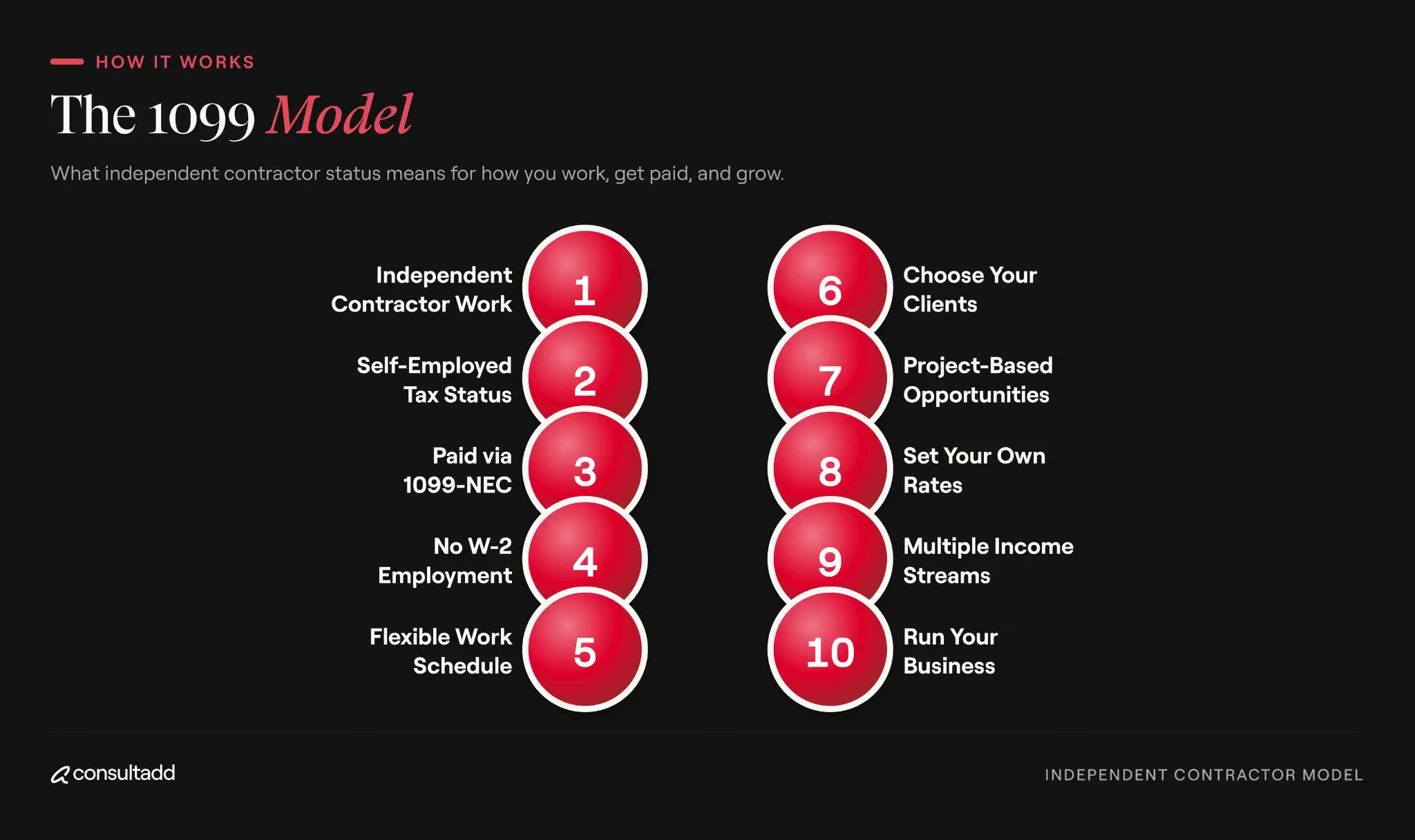
The tax side you need to understand
This is where a 1099 opportunity earns its reputation. Not because the taxes are unfair, but because nobody is doing them for you. Go in prepared and it is manageable. Ignore it and April gets ugly.
Self-employment tax and what to set aside
Since no employer is splitting the bill, you pay both halves of Social Security and Medicare.
For 2026 that self-employment tax is 15.3%, made up of 12.4% for Social Security and 2.9% for Medicare, calculated on about 92.35% of your net earnings.
The Social Security portion applies up to a wage base of $184,500.
To put a number on it, a 1099 worker earning $100,000 pays roughly $7,065 more in employment taxes than a W-2 employee at the same income. That gap surprises people who jump to contracting for the higher rate without adjusting for it.
The fix is boring but works: set aside 25% to 30% of every payment for taxes. Pay quarterly estimated taxes if you expect to owe $1,000 or more for the year. Here are the 2026 numbers worth memorizing.
Deductions that lower your bill
Here is the part people forget when they only look at the tax rate. As a 1099 worker, the IRS treats you as a business, so ordinary business expenses reduce what you owe. You can also deduct half of your self-employment tax right off your income.
The qualified business income deduction lets many contractors write off up to 20% of their business income, and it is now permanent.
Add a home office, software, equipment, mileage, and a retirement plan like a SEP-IRA or Solo 401(k), and your effective tax rate can land lower than that 15.3% headline suggests.
For the full mechanics, the IRS self-employment tax page lays out the forms, mainly Schedule C and Schedule SE.
Pros and cons of a 1099 business opportunity
No sugarcoating here. A 1099 business opportunity gives you real freedom and real responsibility in equal measure. Weigh both before you commit.
The honest read: contracting rewards people who are disciplined about money and comfortable with uneven income. If a slow month would put you in a panic, build a cushion first. If you like variety and hate being told when to log on, this setup can fit you well.
How to spot a legitimate 1099 opportunity
Not everything labeled a "1099 business opportunity" is a real one. The term gets borrowed by pitches that are closer to a sales scheme than actual contract work. A little skepticism protects you.
Real contract work has a clear scope, a rate you agree to, and a client who pays you for services. If someone asks you to pay to join, or the money comes mainly from recruiting other people, that is not a 1099 opportunity. That is a warning sign.
There is also a legal angle. Some companies label workers as 1099 contractors when they treat them like employees, which is called misclassification. The IRS uses a test built on behavioral control, financial control, and the type of relationship.
If you think you have been misclassified, the U.S. Department of Labor and IRS Form SS-8 give you a path to a formal determination.
Common types of 1099 opportunities
The label covers a wide range of work. What ties it together is that you serve clients as an independent business rather than clocking in as staff.
Technology leads the list. Software developers, cloud engineers, data specialists, and IT consultants take contract roles constantly, often through a staffing partner that handles the client relationship and paperwork.
If that is your field, our overview of contract-to-hire roles explains how these engagements often convert into permanent offers, and IT staff augmentation covers how companies bring contractors onto their teams.
Beyond tech, you will find consultants advising on business or finance, creative freelancers like writers and designers, tradespeople, and gig platform workers. The tax rules are the same across all of them.
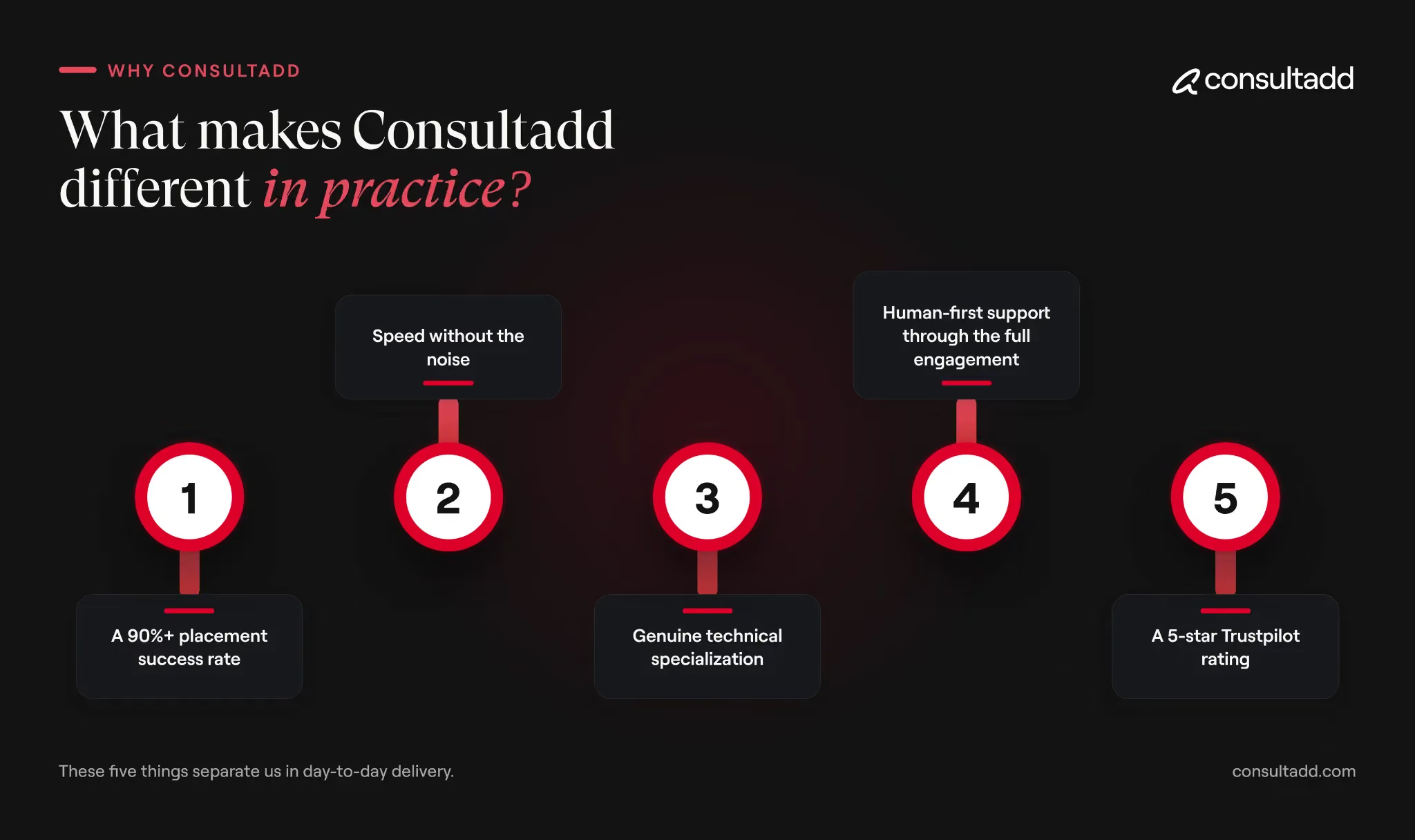
Start Strong With Consultadd
With 15 years in business and 5,000+ successful staffing engagements, we don't just fill roles, we build reliability into your process. We've supported 65 staffing companies in the past year alone and maintain MSAs with industry leaders like Robert Half and TEKsystems.
Here's what working with Consultadd looks like:
- Talent sourced in under 24 hours
- Ready-to-deploy candidates, vetted for experience and compliance
- Lower turnover risk: we match long-term goals, not just short-term needs
- Seamless compliance: visa, documentation, onboarding? Handled.
- Dedicated 1:1 account managers for responsive, personalized support
- Top 100 candidate matches delivered in the past year
- Strong partnerships with universities to tap into fresh, committed talent
- Post-placement support so your investment grows beyond day one
For candidates, your next opportunity is more than just a job title, it's a chance to build skills, gain experience, and move your career forward. At Consultadd, we connect technology professionals with projects and employers that align with their goals, whether they're looking for contract, contract-to-hire, or long-term opportunities.
The tech job market moves fast, but the right guidance can make all the difference. Ready to take the next step in your career journey? Explore Opportunities >>
Key takeaways
- A 1099 business opportunity is simply a chance to earn income as a self-employed independent contractor, reported on Form 1099-NEC instead of a W-2.
- You keep more control and gain wide tax deductions, but you handle your own taxes and give up employer benefits.
- Plan for the 2026 self-employment tax of 15.3% and set aside 25% to 30% of your income.
- Deductions like the 20% qualified business income write-off can pull your effective tax rate below the headline number.
- Vet every offer: real contract work pays you for services, while upfront fees or recruit-to-earn pitches are red flags.
FAQs
Is a 1099 business opportunity the same as a job?
Not exactly. A job usually means W-2 employment with taxes withheld and benefits provided. A 1099 opportunity means you work as an independent contractor, run your own taxes, and serve clients as a business. You gain freedom but take on more responsibility.
Do I need an LLC to take a 1099 opportunity?
No. You can operate as a sole proprietor and still receive 1099-NEC income. Forming an LLC or S Corp can offer liability protection and possible tax savings as your income grows, but it is optional, not a requirement to start.
How much should I set aside for taxes as a 1099 contractor?
A good rule is 25% to 30% of each payment. Since no taxes are withheld, you are responsible for self-employment tax plus income tax. If you expect to owe $1,000 or more for the year, the IRS wants you to pay quarterly estimated taxes.
What is the difference between a 1099-NEC and a 1099-K?
A 1099-NEC reports payments a client made to you directly for services. A 1099-K reports payments processed through platforms like PayPal or Stripe. For 2026, the 1099-K threshold returns to $20,000 and 200 transactions, but you still report all income regardless of which form arrives.
Are 1099 business opportunities legit or a scam?
Most are legitimate contract work. The term gets misused, though. Real opportunities pay you for a service under a clear agreement. If an offer asks for an upfront fee or the income depends on recruiting others, treat it as a warning sign and walk away.
Can a 1099 opportunity turn into a full-time job?
Yes, often. Contract-to-hire arrangements are built for exactly this. Both sides use the contract period to test fit, and many convert into permanent W-2 roles. Working through a staffing partner can make that transition smoother.
.webp)


.png)

.webp)